How to Film the First Dance (When a Guest Holds the Camera)
Learn how to film first dance at your wedding when a guest holds the camera. Practical tips on low light, where to stand, smart zooming, and why a second camera on the crowd reactions matters more than you think.
In this article
- Why the First Dance Is One of the Trickiest Moments for Guest Filming
- Where to Stand So You Don't Block the View or Miss the Emotion
- Low Light Realities: What Your Camcorder Can Handle
- When to Zoom, When to Hold Steady
- Why a Second Camera on the Crowd Matters More Than You Think
- Picking the Right Person to Film Reactions and Interviews
- Pre-Dance Prep: A Quick Checklist Guests Can Follow
- How This Fits Into Your Larger Guest-Filmed Wedding Video
- Turning One-Take Footage Into Something Worth Watching
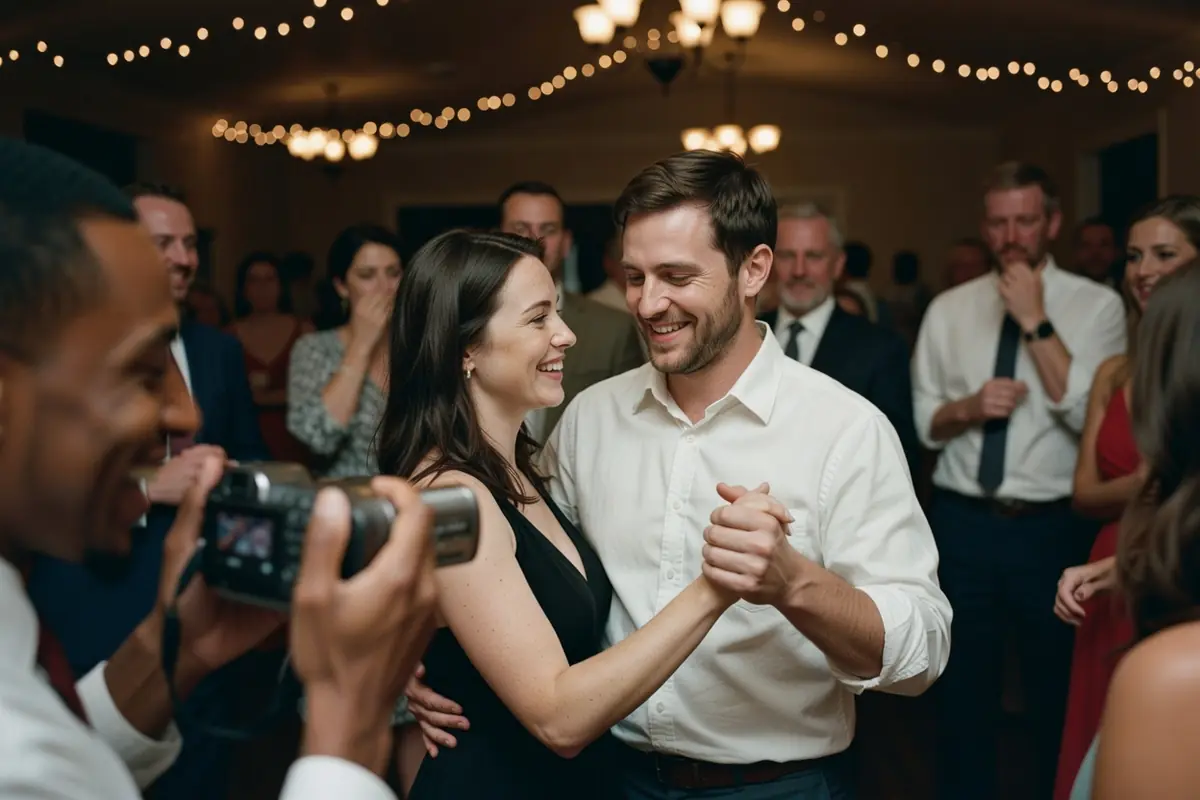
The first dance hits and suddenly every eye is on the couple, including yours if you've been handed the camcorder. Figuring out how to film first dance moments as a guest is harder than it looks: the lights are low, the dance floor is packed, and you get exactly one take. We think the secret is not a steady hand alone. It is knowing where to stand, when to zoom, and why capturing the crowd's reactions with a second camera often makes the bigger difference in the final video. Thinking about the first dance as a story with a clear beginning, middle, and end can guide your choices and help create footage that feels connected and alive.
Why the First Dance Is One of the Trickiest Moments for Guest Filming
Receptions tend to be dimly lit for atmosphere, which challenges compact camcorders. Add a moving couple, guests circling the floor, and the pressure of not ruining a once-in-a-lifetime moment. According to The Knot's 2026 Real Weddings Study, the average videographer costs $2,300. As noted in Vogue, many Gen Z and younger millennial couples are choosing camcorders to capture a more authentic, less polished look instead of hyper-produced video.
The good news is that with a few deliberate choices you can bring home footage that feels warm and real. Our rule of thumb is to prioritize the couple's faces and the guests' reactions over perfect smoothness. That combination, in our view, makes the edited video more engaging. For example, capturing a parent's teary smile or a friend's loud cheer during the dance adds emotional depth that turns good footage into something memorable.
Where to Stand So You Don't Block the View or Miss the Emotion
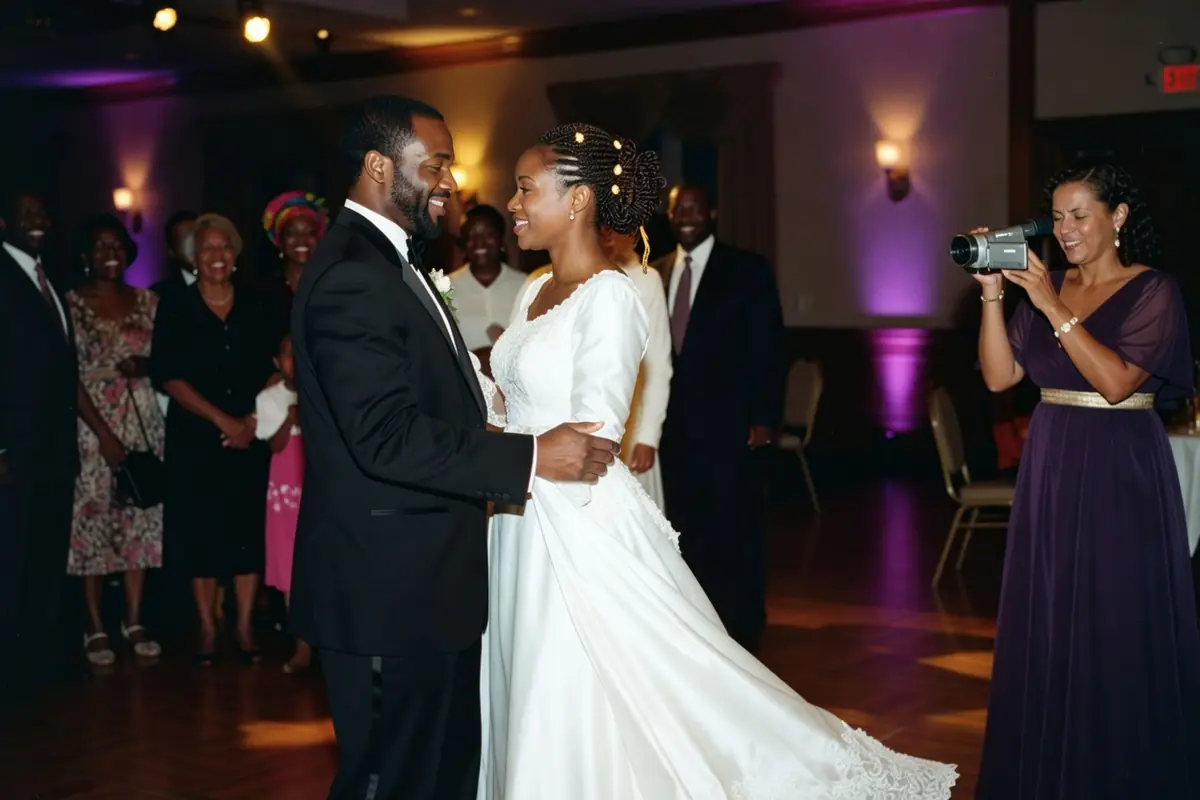
Front and center sounds logical until you realize you are now in every phone photo and blocking Aunt Linda. We recommend positioning yourself at an angle from the couple, back from the dance floor edge. This gives you a clear view of their faces during spins and dips while keeping you out of the main sightlines. Pay attention to the background too so that the couple stands out cleanly in the frame rather than competing with bright lights or busy decor. For example, if the DJ booth sits on the left, stand on the right for a clean background.
If the floor is raised, stand on the lower level and shoot upward slightly. That angle flatters the couple and reduces the chance of guests walking through your shot. For a full list of recommended shots, see our /shot-list. Taking a moment during the rehearsal dinner or right after cocktail hour to note good spots can make all the difference when the room fills up and the lights go down.
Tap to reveal
Click-to-Reveal: Best Positions for Different Dance Floor Setups
What if the dance floor is in the center of the room?
What if it's a small backyard or barn wedding?
What if the couple requested no phones or cameras near them?
Low Light Realities: What Your Camcorder Can Handle
Most reception lighting is designed for mood, not video. A compact camcorder can shoot in lower light than most phones, but it still needs help. Keep the built-in light off. It creates harsh shadows and makes everyone squint. Instead ask the DJ or planner to increase the uplights if possible. Adjusting white balance before the dance helps skin tones look natural under colored lights, and focusing manually on the couple keeps them sharp even as they move through dimmer areas.
Hold the camera steady with both hands, elbows tucked into your sides like a tripod. This reduces shake that becomes obvious in low light. Make sure it is fully charged before the reception starts. Practicing a stable grip ahead of time builds confidence so you can follow the couple smoothly without the footage turning shaky during turns or dips. For example, try walking around your living room while keeping the view steady on a specific object.
In our view, the best first dance footage rarely comes from the brightest shots. It comes from the ones that feel like you were right there in the moment.
When to Zoom, When to Hold Steady
New filmmakers tend to zoom in and out like they are filming a wildlife documentary. We advise against it. Constant zooming makes the final edit hard to watch. Instead pick one focal length and hold it before changing. Start wide to show the whole scene as the couple walks out, then slowly zoom to a medium shot once they begin dancing. This creates a sense of flow that feels natural and gives the editor clean segments to weave together.
Our rule of thumb is to zoom only during key moments such as a tender touch or at the end for the kiss or applause. Any more than that and the footage feels restless. If using a compact camcorder the controls are usually intuitive so you can practice the motion before the music starts. Thinking ahead about the song structure lets you anticipate the emotional peaks. For example, if the song builds to a chorus have your zoom ready for that moment.
Shot-list builder
First Dance Shot List for the Person Holding the Camera
Tick these off as you film so the editor has options. Print or save this list before the reception.
Why a Second Camera on the Crowd Matters More Than You Think
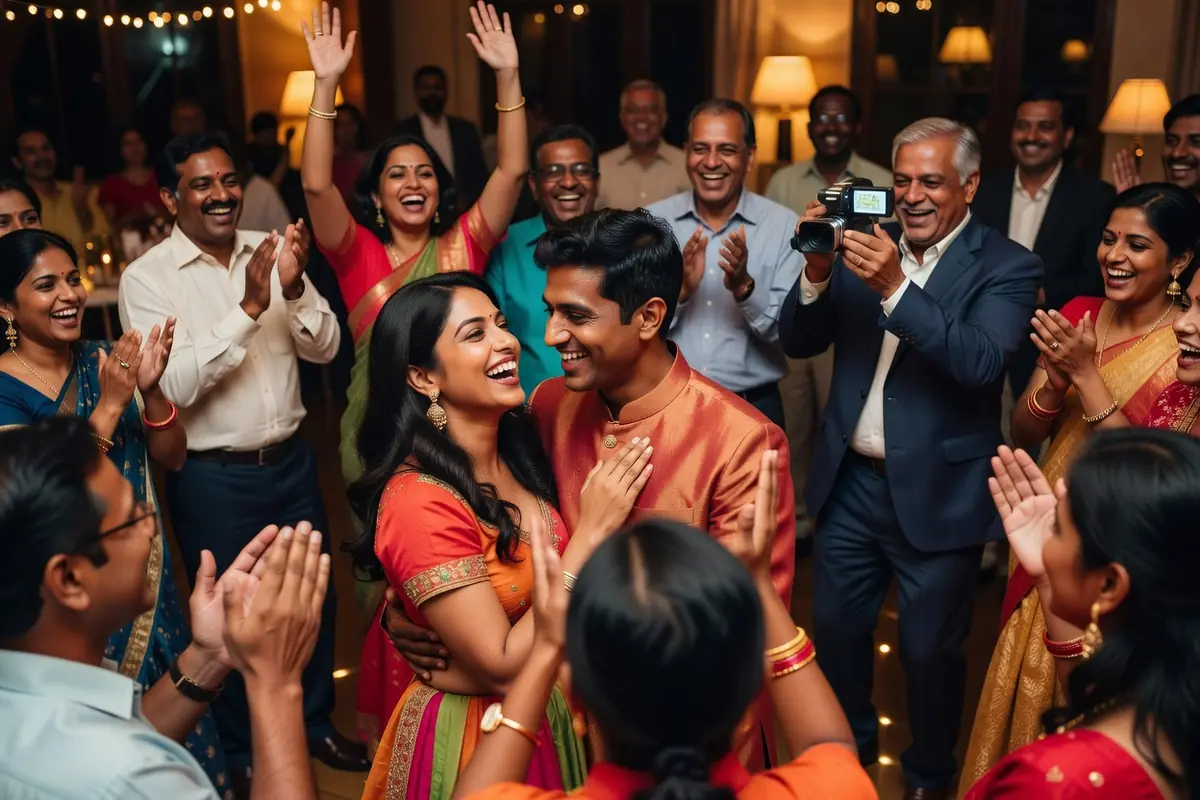
Here is the part most guests miss. The first dance is not only about the couple. The real story lives in how their people react. A single camera on the couple gives you the action. A second camera on the crowd gives you the heart. We think this is the difference between a nice clip and a video that captures the full emotion of the day. These reaction shots add context and warmth, showing the love surrounding the couple in real time.
According to CNBC, Wedding Weekender founder Anne Marie Carroll advises assigning a few wedding-party members to capture specific moments, picking an outgoing bridesmaid or groomsman to interview guests at cocktail hour, and leaving the camcorder near the guest book for video messages. The same principle applies here. Give one person the main camcorder for the couple and hand another the second camera with instructions to film only reactions. This is one of the smartest things you can do. See our /how-it-works page for more.
Look for the mom dabbing her eyes, the college friends cheering, the flower girl covering her mouth in awe. These shots cut beautifully between the couple's moves and turn a simple dance into a full emotional scene. You can add extra camcorders to capture more angles. The variety helps the final video feel dynamic and complete, mixing the intimate with the communal joy of the day.
Tap a card
First Dance Filming Mistakes vs Fixes
Picking the Right Person to Film Reactions and Interviews
Not every groomsman makes a good camera operator. Look for the outgoing bridesmaid or groomsman who already loves talking to people. They can grab quick guest interviews during cocktail hour and then pivot to filming reactions during the first dance. We cover this in detail in our /how-it-works guide.
Give them three simple prompts: "How do you know the couple?", "What's your favorite memory so far today?", and "What advice do you have for the newlyweds?" The answers pair perfectly with first dance footage. This approach turns your guest-filmed wedding video from random clips into something cohesive and meaningful. The interviews add another layer of storytelling that connects the visual moments to the personal stories everyone carries with them.
Pre-Dance Prep: A Quick Checklist Guests Can Follow
Checklist · saves on this device
First Dance Filming Prep Checklist
How This Fits Into Your Larger Guest-Filmed Wedding Video
The first dance is just one piece. Pair it with strong ceremony tips from our /shot-list, solid getting-ready clips, and thoughtful toasts and you have the ingredients for a full film. Our /how-it-works page walks through how all these pieces work together without chaos. Each part builds on the last so the final video flows like the day itself, moving from quiet morning preparations to the lively reception energy and everything in between.
If you are coordinating this for friends, consider the Keepsake package. Packages start at $449. See /packages for complete details and to hold your date with a $100 deposit.
Turning One-Take Footage Into Something Worth Watching
Once the music stops, drop the camcorder near the guest book for video messages as CNBC suggests. Later, the clips including your carefully captured first dance can be turned into a film that feels like the day itself: warm, a little imperfect, and full of real emotion. Blending the steady shots of the couple with those honest guest reactions creates a narrative that feels both intimate and shared.
Whether you follow every tip here or just remember the side angle and the second camera suggestion, your footage will be better than typical shaky phone video. The practical approaches here can help transform simple recordings into lasting memories that capture the spirit of the celebration in an authentic way.
Questions couples ask
Should the person filming the first dance stand in the middle of the dance floor?
Is it okay to use a phone instead of a camcorder for the first dance?
How much should I zoom during the first dance?
What if only one person is available to film the first dance?
Does the first dance need to be filmed in slow motion?
Keep reading