Ceremony Filming Tips for a Handheld Camera
Concrete ceremony filming tips for a handheld camera: where to stand without blocking the photographer, how to film the processional, vows, rings, kiss and recessional with steady footage and clear audio. Real techniques for guest filmmakers.
In this article
- Why These Ceremony Filming Tips Focus Only on the Ceremony
- Where to Stand So You Are Not in the Photographer's Aisle
- Pre-Ceremony Prep for Steady Handheld Footage
- How to Film the Processional With a Handheld Camcorder
- Filming Vows on a Camcorder: Audio Is Everything
- Nailing the Ring Exchange, First Kiss, and Recessional
- Etiquette and Practical Rules of Thumb
- What to Do With Your Ceremony Footage After the Wedding
- Common Mistakes That Ruin Ceremony Video
Filming a wedding ceremony with a handheld camera sounds simple until you are standing there trying to capture the bride walking down the aisle without camera shake or blocking the photographer. These practical tips cover exactly how to film the processional, vows, ring exchange, first kiss, and recessional with a compact camcorder. The difference between blurry vows and rewatchable footage comes down to where you stand and when you zoom. For example, plant yourself off to the side near the front, tuck elbows into your ribs, and breathe steadily to cut shake. Use slow zooms only at key transitions. Preparing your position and grip in advance produces steady handheld ceremony video full of genuine emotion and natural warmth.
The Knot 2026 Real Weddings Study shows the average videographer costs $2,300 and 88 percent of couples hire a photographer. Vogue reports that Gen Z and younger millennial couples choose camcorders because they prefer authentic footage over slow-motion and hyper-produced video. Some add camcorders alongside a full media team while others rely on guest perspectives. The goal is footage that feels immediate, as if you stood right there.
Why These Ceremony Filming Tips Focus Only on the Ceremony
The ceremony has a quieter focus than the reception. This guide limits itself to the processional, vows, ring exchange, first kiss, and recessional. See /shot-list for the full day and /how-it-works for additional guidance. These sections tend to be the most emotionally charged and logistically tricky for a guest holding the camera. The tips stress where to stand so professionals can work without interference. Decision rule: if your spot blocks any pro angle, shift immediately to the far side.
Where to Stand So You Are Not in the Photographer's Aisle
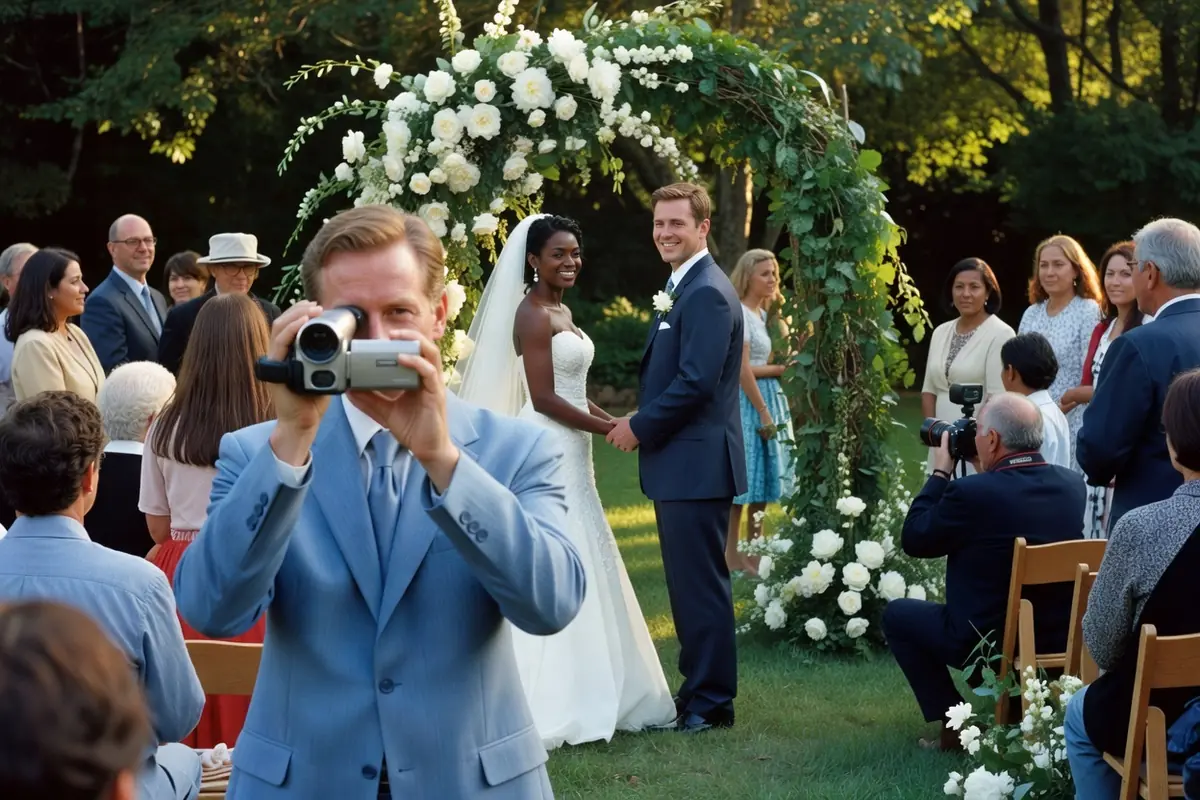
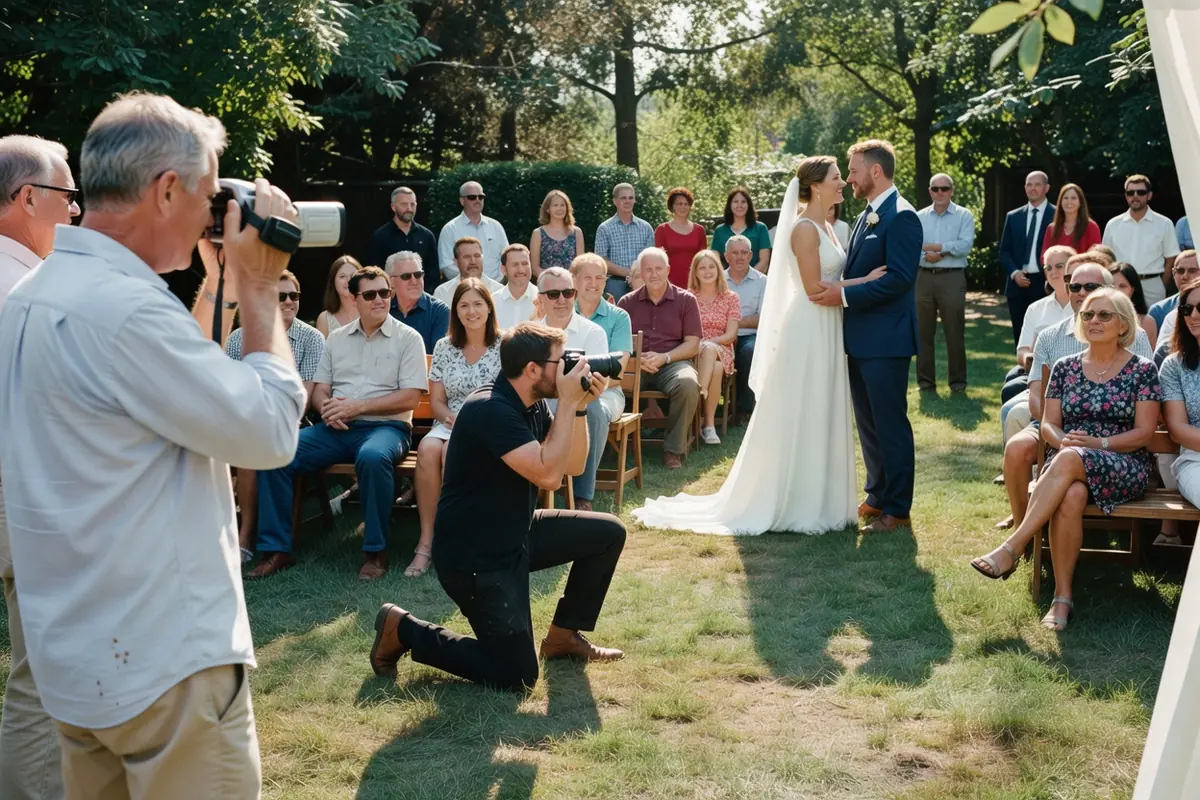
Photographers usually claim the center aisle and nearby spots. Choose a position off to the side near the front. For example, if the photographer works the left side of the aisle, stand on the right. In a garden setup, position yourself behind the last row of chairs on the outer edge. This angle still captures faces clearly during vows. Never stand in the aisle or directly behind the officiant. Pick your spot before guests arrive, test the framing in the viewfinder, and stay planted. Moving mid-ceremony draws attention.
In a church with fixed pews, ask about a side balcony for an elevated view. Otherwise use the front outside corner of the seating area. Test the view and commit. Pivot slowly from the waist instead of swinging arms to maintain stability. This approach keeps backgrounds clean and helps deliver footage the editor can actually use.
Tap to reveal
Click-to-Reveal: Best Camera Positions by Venue Type
Traditional church with long aisle
Outdoor garden or backyard ceremony
Beach or uneven terrain
Hotel ballroom or small indoor space
Pre-Ceremony Prep for Steady Handheld Footage
Charge the battery fully and insert a formatted memory card. Test zoom, focus, and audio from your exact chosen spot. For example, have a friend stand where the couple will be and speak at normal volume while you record to confirm the built-in mic captures clear words. Practice the grip with elbows tucked into your ribs. Check light direction to avoid silhouettes. This preparation removes technical worry so you can focus on timing and emotion once the ceremony starts. Decision rule: if test audio sounds muffled, move closer before guests arrive.
How to Film the Processional With a Handheld Camcorder
Start recording before the first attendant appears. Hold the camera with both hands, elbows tucked, and breathe steadily. Film each person with one continuous shot that moves smoothly from wide to medium on their face. For the bride, begin with the full aisle to show the setting then zoom gently to her expression and the groom's reaction. Avoid stopping between people so the editor receives a seamless sequence. Use the flip screen if available to keep the camera at chest height. Smooth torso pivots instead of arm swings keep footage steady. These small adjustments reduce shake and deliver natural clips.
Filming Vows on a Camcorder: Audio Is Everything
Clear audio turns usable footage into something special. Position yourself close enough for the built-in microphone to record every word while staying far enough to remain unobtrusive. Face the couple from the side for both expressions and sound. If the officiant uses a microphone, angle toward the couple but expect some bleed. In wind, shield the mic with your body. Keep rolling continuously through both vows with minimal zooming. This section is rewatched often, so prioritize steady framing and clean sound over dramatic moves.
Scrub the timeline
Ceremony Timeline Scrubber With Filming Windows
- Before the ceremony Arrive and Claim Spot
Find your side position, test framing, confirm equipment is ready. Start a test recording to check audio and stability.
- Processional Record the Full Walks
Begin early. Use continuous shots with gentle zooms for each attendant to capture natural expressions and movement.
- Officiant opening Wide establishing shot
Capture the full scene and any readings. Stay steady with minimal zooming to show the atmosphere.
- Vows Tight but respectful
Prioritize clear audio while framing the couple's faces. Keep camera rolling throughout for complete coverage.
- Ring exchange Focus on hands
Use a slow zoom to close-up of rings and hands. Hold steady to give the editor good options.
- First kiss Slight pull back
Adjust to a wider view just before the kiss to capture reactions from the couple and nearby guests.
- Recessional Follow the couple out
Turn and film them walking back down the aisle. Include any confetti, cheers or joyful exit traditions.
Nailing the Ring Exchange, First Kiss, and Recessional
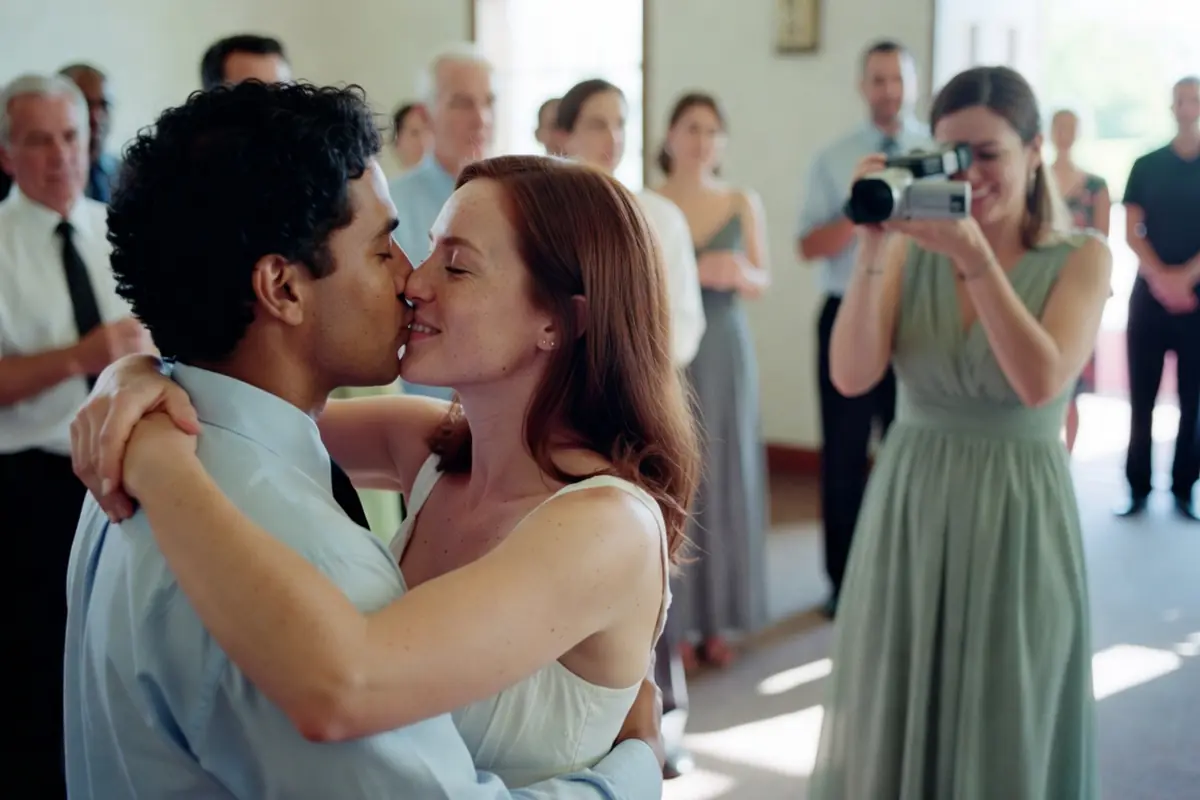
For rings, begin a slow zoom to the hands when the officiant starts that segment. Hold the close-up long enough for the editor to select the best take then zoom out to both faces. Frame the first kiss in a medium shot that includes a few nearby guests for reaction. Keep recording as the couple turns, smiles, and begins the recessional. Pan slightly to catch any petal toss, bubbles, or cheers. Steady, deliberate movements throughout these moments produce clean options that blend well in the final edit.
| Ceremony Moment | Ideal Framing | Key Technical Tip | What to Avoid |
|---|---|---|---|
| Processional | Wide to medium | One continuous recording | Stopping between each attendant |
| Vows | Medium close from side | Position for clear audio | Standing directly behind officiant |
| Ring exchange | Close on hands then pull out | Slow steady zoom | Shaky close-up from too far |
| First kiss | Medium shot with guests visible | Anticipate the moment | Zooming frantically at the last second |
| Recessional | Follow from side angle | Keep rolling until they exit | Blocking the couple's path |
Etiquette and Practical Rules of Thumb
Turn your phone to silent and keep it in your pocket. Do not narrate or whisper into the camera. Dress like a guest, not crew. If the planner asks you to move, do it immediately. Assign one reliable person per major section of the day. The /shot-list page has a complete system for dividing duties. Decision rule: if your presence pulls attention from the couple, step back. These choices keep the ceremony focused on the couple while still gathering useful footage.
Shot-list builder
Ceremony Shot List Generator for Handheld Cameras
Check the moments below that you feel confident capturing. The list updates live and can be printed or saved for the wedding day. It is built specifically around the processional, vows, rings, kiss, and recessional so you know exactly what to prioritize.
What to Do With Your Ceremony Footage After the Wedding
Once the ceremony ends, secure the camcorder and enjoy the rest of the day. If using one of our kits, we ship the camcorder, the Instax Mini instant camera (with film) and the photo album together in one box. The couple keeps the photo album and every instant print. Both cameras (camcorder and Instax) go back in that same box with the prepaid return label. Packages start at $449. The service edits the footage into a finished wedding film. See /how-it-works for full details.
Read the /compare page to learn how this approach fits with professional videography. The /shot-list page ties these techniques together with the rest of the day. These resources give concrete next steps for capturing authentic ceremony moments.
Common Mistakes That Ruin Ceremony Video
- Standing in the main aisle or directly in front of the photographer's favorite angles.
- Using digital zoom, which makes the image pixelated and unusable.
- Stopping and starting the recording constantly instead of one long take.
- Holding the camera at full arm extension, which guarantees shake.
- Forgetting to press record again after checking the screen.
- Talking or narrating during the vows, which ruins the audio for editing.
- Moving frequently during key moments instead of staying planted in one respectful spot.
Avoid these errors and the footage stays useful. Treat the camcorder as a quiet observer. Focus on preparation, stable grip, and respect for the photographer and guests. The result is handheld ceremony video that adds an intimate layer without distraction.
Questions couples ask
Where should a guest stand to film a wedding ceremony?
How do you get clear audio when filming vows on a camcorder?
What is the best way to hold a handheld camera steady during a ceremony?
Should you zoom during the processional or keep it wide?
Is it better to record one long clip or many short ones?
What happens to the ceremony footage if we use Ever After Tapes?
Keep reading