How to Run Guest Interviews at Cocktail Hour
Learn the logistics of wedding guest video interviews at cocktail hour: who should ask questions, ideal setup, getting shy relatives talking, timing, and flow. Practical steps for authentic footage that makes your film unforgettable.
In this article
- Why Cocktail Hour Beats Every Other Time for Wedding Guest Video Interviews
- Who Should Hold the Camera and Ask the Questions
- Setting Up the Interview Station Without Killing the Vibe
- How Long Should Each Interview Last?
- Getting Shy Relatives to Actually Talk on Camera
- Managing Noise, Lighting, and Other Real-World Logistics
- Keeping Energy High and the Line Moving
- Turning All Those Clips Into Something Special
- Common Mistakes That Waste Good Footage
- Making It Feel Fun Instead of an Assignment
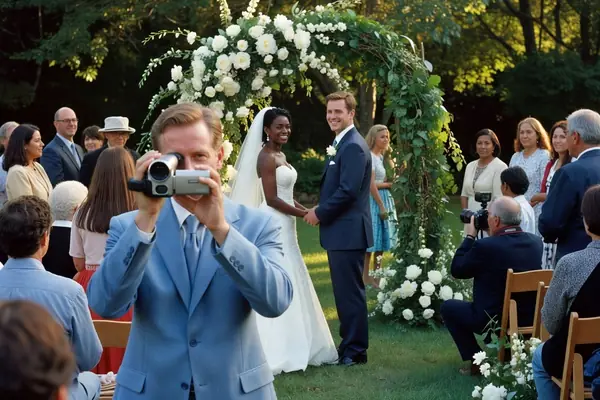
To make your wedding film feel like the day itself rather than a polished ad, run wedding guest video interviews during cocktail hour. One outgoing person with a camcorder can collect genuine advice, funny stories, and heartfelt wishes. Done poorly it feels forced. With the right logistics it becomes the part friends and family replay years later.
Why Cocktail Hour Beats Every Other Time for Wedding Guest Video Interviews
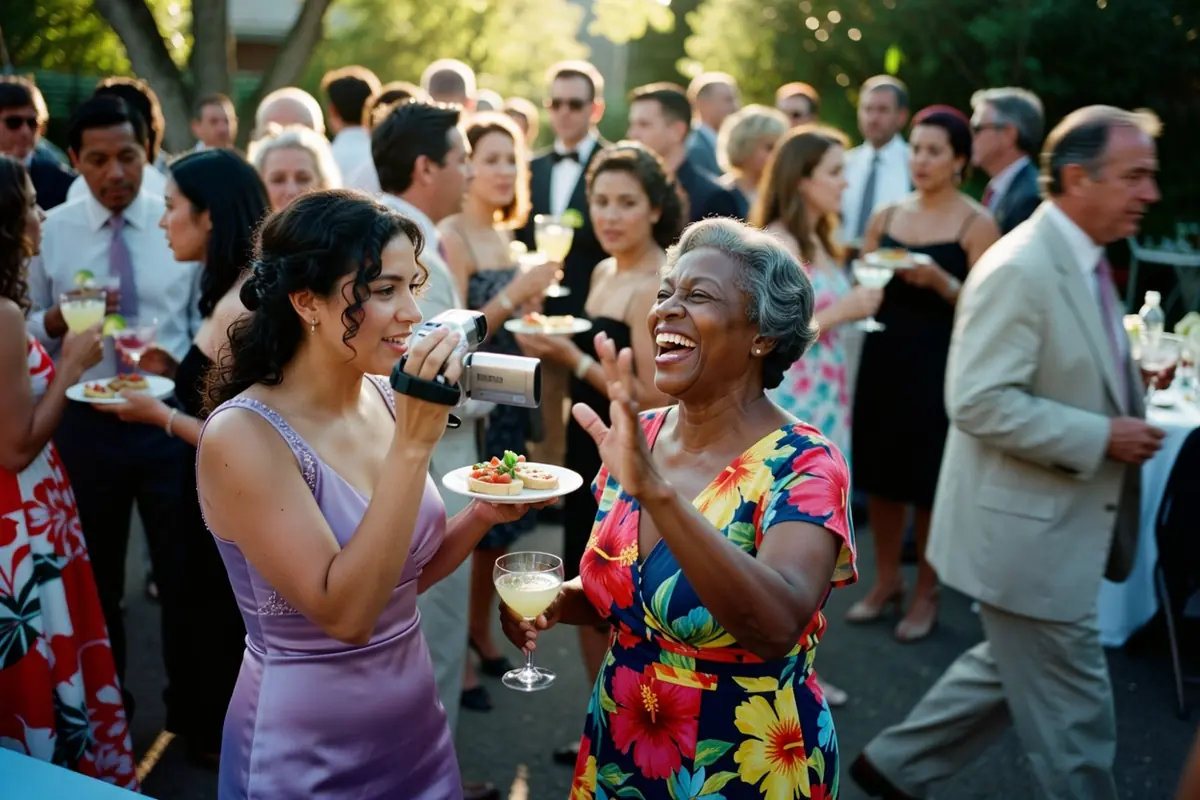
Guests are relaxed, the energy is high, and the bar is open. Unlike toasts at dinner (where people are hungry and seated) or the dance floor (where the music drowns everything out), cocktail hour offers natural sound and willing participants. According to The Knot's 2026 Real Weddings Study of 10,474 couples, the average guest count is 117. Even if you interview a fraction of them, you gather a rich mix of perspectives. Vogue notes that Gen Z and younger millennial couples are choosing this authentic approach over hyper-produced slow-motion videos. Real voices from the people who know you best beat another drone shot every time.
See the guide to guest interview questions for exact prompts that draw out meaningful responses. This article focuses on the practical side: who holds the camera, where to stand, how long to film, and techniques that get even the quietest relatives to open up.
Who Should Hold the Camera and Ask the Questions
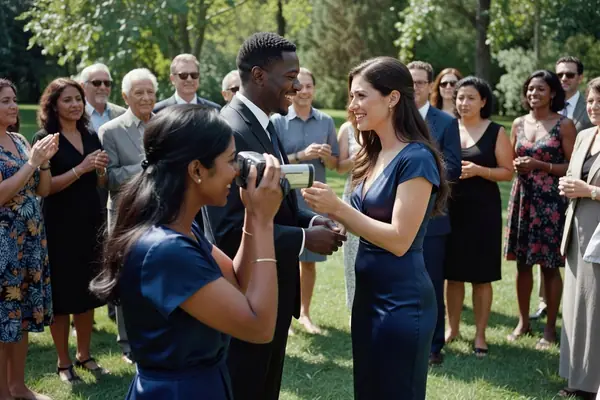
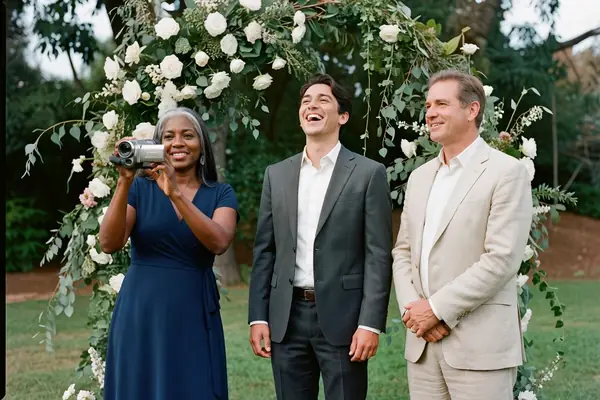
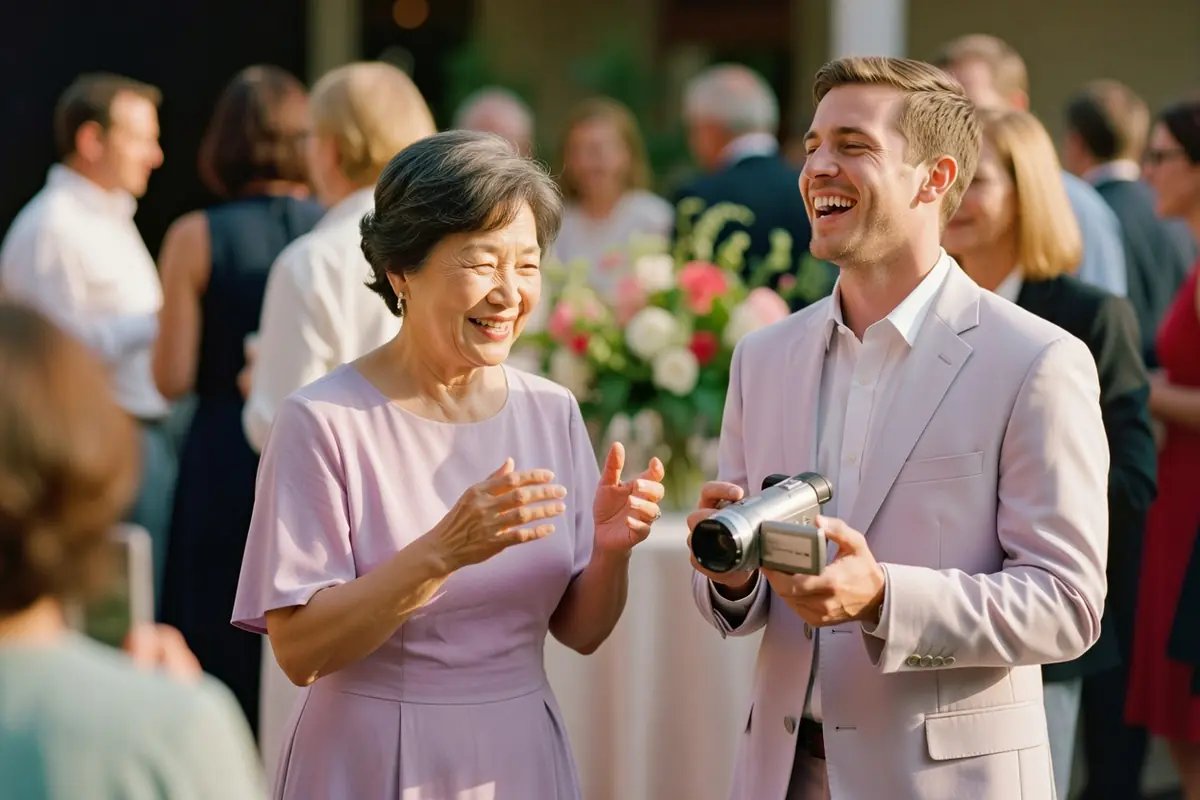
CNBC's profile of Wedding Weekender founder Anne Marie Carroll offers solid advice: assign a few wedding-party members specific jobs, and pick an outgoing bridesmaid or groomsman to lead interviews at cocktail hour. The interviewer needs to be someone guests already know and like, but not the couple themselves. They should be comfortable on camera and able to keep things light.
Brief them ahead of time with your preferred prompts and the tone you want. For example, tell them "It's okay to laugh, add your own memory, or gently steer back on track. The goal is conversation, not interrogation." This role can rotate so no one misses the party. See how to assign cameras to the wedding party for more ways to spread the filming fun.
Tap a card
Which Wedding Party Member Should Run Interviews?
Setting Up the Interview Station Without Killing the Vibe
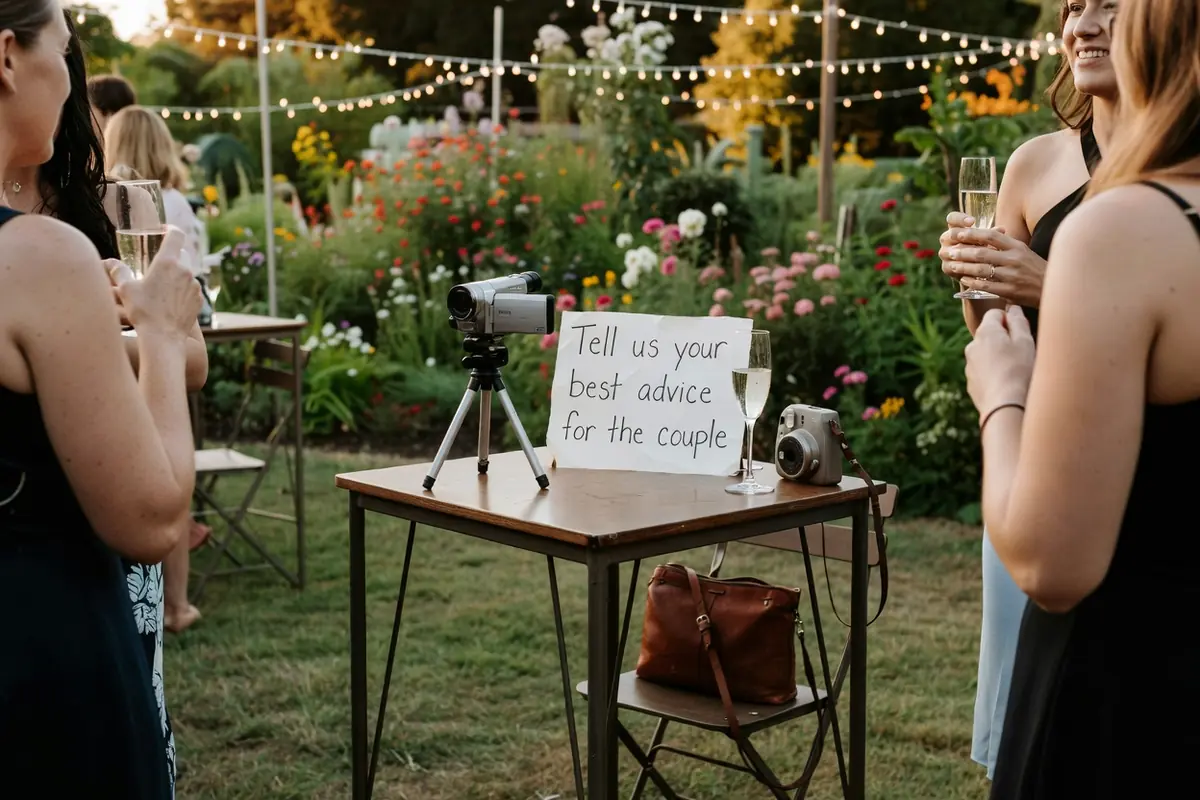
Choose a spot slightly removed from the main cocktail flow but still visible so it feels optional and fun, not mandatory. Good background options include a simple hedge, a plain wall with subtle decor, or the edge of a tent. Avoid noisy generators, speakers, or busy pathways. The person filming should stand or sit so the guest faces slightly away from the sun or bright lights to avoid squinting.
A small high-top table or stool works well. Place a sign that says something warm like "Share a wish for the couple, totally optional." Keep the setup inviting and low-pressure. You can include an instant camera so guests can take a quick photo together after the interview. The Instax Mini 12 uses film that develops in about 90 seconds and costs roughly $0.70-$0.90 per shot.
How Long Should Each Interview Last?
Keep them short so the line never grows long and guests don't feel trapped. Aim for long enough to capture one solid story or piece of advice but not so long that the party passes them by. The interviewer should gently wrap up when the point is made. This respects everyone's time while still gathering usable footage.
A compact camcorder with charged batteries and memory card easily handles an evening of on-and-off recording. As a general example, compact camcorders often provide around 55 minutes of typical recording time per battery. Bring a spare charger or extra battery if your event is especially long. Link this activity to your overall reception shot list so it doesn't conflict with other important moments.
| Style | When It Works Best | Watch Out For |
|---|---|---|
| Stationary table with sign | Larger weddings where you want a steady stream of guests | Can feel too formal if the sign is too corporate |
| Roaming interviewer | Intimate weddings or when you want more candid energy | Audio varies wildly and some guests get camera shy when approached |
| Hybrid: station plus roaming | Most weddings, gives options | Requires two people who communicate well |
Getting Shy Relatives to Actually Talk on Camera
Shy guests often freeze because they feel put on the spot. Use structure paired with warmth. Decision rule: Start with the easiest question so they succeed immediately, have them speak directly to the couple instead of the lens, and give permission to be brief. For example, prepare backup questions related to how they know the couple or a favorite shared memory. Smile and maintain eye contact to build rapport before recording. If they seem nervous, share a light memory of your own first to break the ice.
Tap to reveal
Click-to-Reveal Tips for Shy Guests
Make it feel like a private conversation
Start ridiculously easy
Use humor to lower the stakes
Give them an exit ramp
Assign a second person whose only job is to gently invite guests over. A script that works: "Want to say something nice for the couple on camera? It will be quick." Diverse crowds respond differently. For older relatives, ask for marriage advice. For friends, ask for funny stories. Observe which questions generate the most enthusiastic responses and pass those insights to the interviewer.
Managing Noise, Lighting, and Other Real-World Logistics
Audio is king for interviews. Even the funniest story is useless if you cannot hear it over the band doing sound check. Test your spot beforehand. Stand where the interviewer will be and have a friend talk at normal volume. If you hear clinking glasses or music too loudly, move. Natural light is usually best. Golden hour during a September or October wedding gives beautiful soft light.
A compact camcorder kit with charged batteries and memory card can handle the evening. The prepaid return label means you do not stress about packing. The footage is edited into a finished wedding film. For more on that process, see how a wedding camcorder rental works.
Keeping Energy High and the Line Moving
Cocktail hour is limited. Keep the interviews from becoming a bottleneck by having a clear system with one person inviting guests, one filming, clear prompts, and a visible but not obnoxious station. Pair this with an instant camera. The couple keeps the photo album and every instant print.
Compare this to audio guestbooks, which generally rent for $250-$400. Video adds faces and expressions that an audio-only recording cannot match. If you are on a tighter budget, this approach lets you skip or reduce traditional videography that averages $2,300 according to The Knot. Packages start at $449.
Checklist · saves on this device
Cocktail Hour Interview Station Checklist
Turning All Those Clips Into Something Special
Once the day is over, both cameras (camcorder and Instax) go back in that same box with the prepaid return label. The footage is edited into a finished film that mixes the interviews with ceremony, reception, and candid footage shot by your friends.
The goal is not to interview every single person. It is to capture enough real voices that your film feels like it was made by the village that raised you.
Common Mistakes That Waste Good Footage
- Waiting until the last minute to pick an interviewer. Brief them at the rehearsal dinner instead.
- Choosing a location with terrible audio. Test it first.
- Using yes-or-no questions that produce one-word answers. Open-ended prompts work better.
- Letting the interviewer stand too far away or point the camera at the ground.
- Forgetting to tell guests they can talk directly to the couple instead of the lens.
- Trying to capture every guest instead of focusing on quality and variety.
Review the wedding filming etiquette guide so guests filming feel helpful rather than intrusive. If you are still deciding between options, check the comparison of camcorder rental companies and Ever After Tapes vs Wedding Weekender. Wedding Weekender's core package lists at $729 while their top option reaches $1,249. Their packages do not include an instant camera.
Making It Feel Fun Instead of an Assignment
The best interviews happen when everyone is enjoying themselves. Play music softly near the station. Have snacks or drinks nearby. For example, the interviewer can celebrate each person who participates by saying "That was perfect, thank you!" Some couples prepare fun questions guests can choose from such as "What does the couple's future dog look like?" or "Which one is messier?" The more it feels like a game instead of a task, the better the responses.
If you are also planning video messages by leaving the camcorder near the guest book, you can use similar questions but let people self-select. The cocktail hour version lets you be more proactive about who appears in the final film. Either way, the authentic voices captured will add tremendous value to your finished wedding film.
Questions couples ask
Who is the best person to interview guests at a wedding?
How do you get shy guests to talk during wedding video interviews?
Where is the best place to set up guest interviews at cocktail hour?
How long should wedding guest video interviews last?
Can you do guest interviews if you already hired a videographer?
What equipment do you need for cocktail hour guest interviews?
Keep reading