Beach Wedding Tips: Wind, Sand, and Sunset
Beach wedding tips for filming in wind, protecting gear from sand and salt, using sunset backlight, and building a practical timeline. Includes checklists, shot lists, and real techniques that deliver watchable footage.

In this article
- The Unique Challenges of Filming by the Ocean
- How to Capture Clear Vows When the Wind Is Howling
- Sand-Proofing a Camcorder You Have to Return
- Making the Most of Sunset Backlight
- Sunset Beach Wedding Timeline for Better Footage
- Beach Ceremony Shot List for Guests and Friends
- The Instant Camera That Comes With Every Package
- Camcorder Rental vs. Hiring a Videographer for the Beach
- Turning Beach Chaos Into a Film You Will Reopen
Beach weddings look magical until you try to film them. The wind that makes hair look amazing destroys audio. Sand gets into every crevice of a camera. Salt spray can ruin equipment that you have to return. And the sunset you chose for its romantic light can blind your lens or turn your couple into silhouettes.
These beach wedding tips focus on the real mechanics of getting usable footage on any coastline. The following practical techniques help you handle wind on vows, protect gear from sand and salt, and use sunset backlight to your advantage. Packages start at $449 (the Keepsake). We ship the camcorder, the Instax Mini instant camera (with film) and the photo album together in one box. The couple keeps the photo album and every instant print. Both cameras (camcorder and Instax) go back in that same box with the prepaid return label. We edit the footage into a finished wedding film. You can add extra camcorders. A $100 deposit holds a date.
The Unique Challenges of Filming by the Ocean
Coastal weddings combine ceremony pressures with environmental challenges. According to The Knot's 2026 Real Weddings Study of 10,474 couples, the average wedding costs $34,000 with videography averaging $2,300. As Vogue noted in "Why Wedding Camcorders Are Suddenly Everywhere," many Gen Z and younger millennial couples prefer authentic footage over hyper-produced videos. Some use camcorders alongside a media team while others rely on them instead of traditional videography.
In our view the camcorder approach works well for beaches. It captures real reactions and avoids putting a crew in the same harsh conditions. The key is using specific techniques that turn wind, sand, and light from problems into strengths. See the Vogue article for more on this trend.
The ocean does not care about your shot list, but with a few adjustments it can become the best supporting actor in your wedding film.
How to Capture Clear Vows When the Wind Is Howling
Wind is the top threat to audio at beach ceremonies. It adds a constant rumble that is hard to fix later. Rule of thumb: position the couple and officiant with backs or sides to the prevailing wind so voices carry away from it. For example, if wind comes off the water, have the couple face the guests with the ocean behind them.
Place one camera close for voices (use a windscreen if you have one). A second camera farther back captures a wide shot and alternate audio for the edit. From CNBC tips via Wedding Weekender founder: assign wedding party members specific moments to film, pick an outgoing attendant to interview guests at cocktail hour, and leave the camcorder by the guest book for video messages. These assignments improve coverage and audio quality.
Test audio in advance. Have the couple rehearse a few vow lines while you monitor sound levels and adjust for wind direction. Encourage speakers to project their voices. If a gust hits during key moments, the officiant can repeat the line afterward. This provides options for the final film.
Tap to reveal
Click-to-Reveal: Beach Filming Fixes
Wind noise ruining the vows?
Sand getting everywhere?
Sunset creating harsh backlight?
Salt spray on the rental gear?
Sand-Proofing a Camcorder You Have to Return
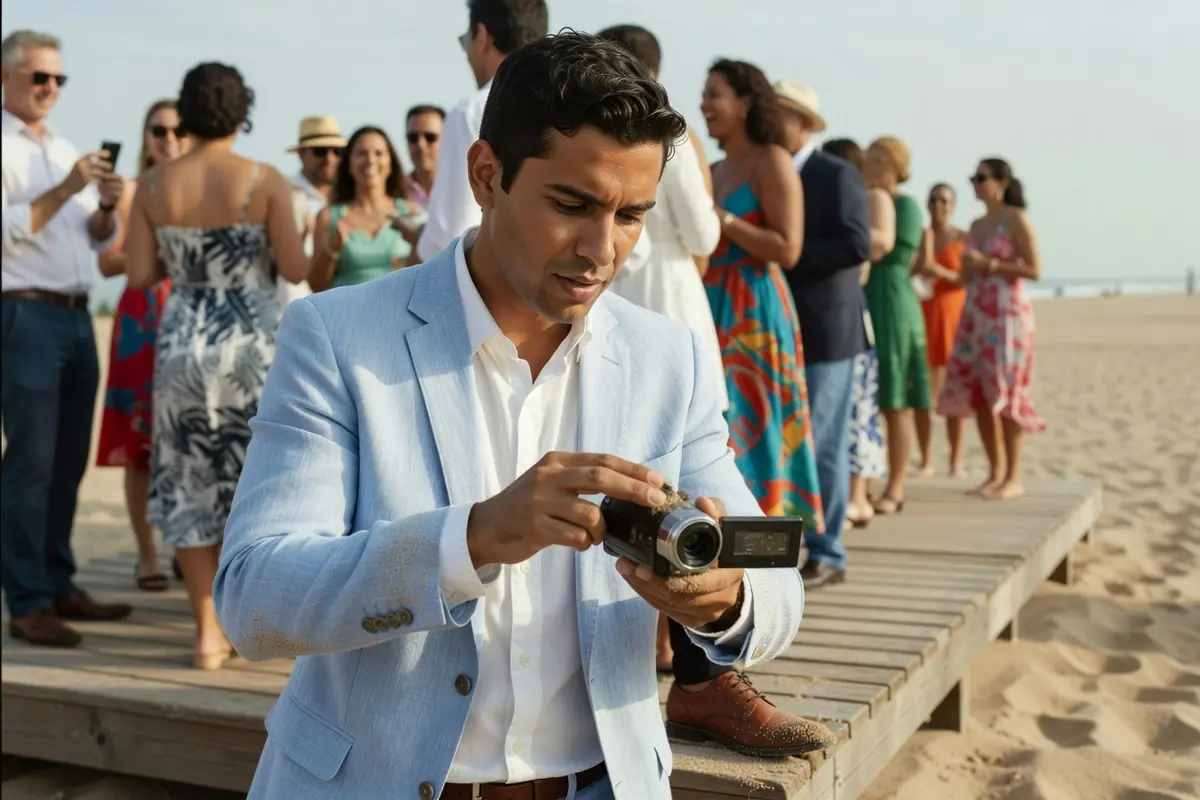
Sand can scratch lenses and clog mechanisms. Since both cameras (camcorder and Instax) go back in that same box with the prepaid return label, prevention is essential. Always use a raised surface for any battery or card changes. Never place the camera directly on the sand. Between uses, store it in a sealed bag. A soft brush and air blower help clean the exterior safely. Consider wind direction when selecting camera positions to limit salt spray.
Making the Most of Sunset Backlight
Sunset provides flattering warm light and turns the ocean golden, which is why many choose this time. However, shooting directly into it creates silhouettes or flare. Decision rule: keep the sun behind or to the side of the couple to create rim light and separation. Expose for the faces so the sky and water glow in the background.
For example, capture some shots with the couple between you and the water for colorful reflections. Take others from a 45-degree side angle to balance light on their faces with the sunset. Mix wide shots of the environment with closeups of hands, rings, and expressions. This variety gives plenty of material to edit a dynamic sequence. Pay attention to the changing light and shift positions as needed to maintain good exposure on the couple.
Sunset Beach Wedding Timeline for Better Footage
A smart timeline puts the best light on your key moments without rushing the day. The schedule below prioritizes video conditions while allowing flexibility. Vows timed for the golden hour help ensure flattering light and vibrant colors in your footage.
Scrub the timeline
Practical Sunset Beach Wedding Timeline
- 90 minutes before sunset Cocktails and candid footage
Guests arrive, instant cameras come out, and you capture natural getting-ready and mingling shots in soft light. Assign one friend to gather short guest interviews away from the loudest wind. Example prompt: 'What is your favorite memory with the couple?'
- 45 minutes before sunset Ceremony begins
Processional happens while light is still flattering. Position for back-to-wind audio. Vows land in the sweetest light as the sun lowers.
- At sunset Kiss, portraits, recessional
Capture the exact color burst with wide and tight shots. The dramatic sky becomes part of the story instead of a technical problem.
- After dark Reception and messages
Move to a lit area for toasts and dancing. Park the camcorder near the guest book so guests can leave video messages once the wind dies down.
Beach Ceremony Shot List for Guests and Friends
Without guidance, guests often record the same wide shots and miss important details. This beach-specific list helps assigned friends capture varied angles, audio, and emotion. It works with the guide at /shot-list.
Shot-list builder
Beach Ceremony Shot List
Give this list to assigned friends. Tick off what matters most to you. Focus on audio, light, and the unique beach details that make the day yours.

The Instant Camera That Comes With Every Package
The Instax Mini instant camera gives guests a way to create instant physical memories during the beach weekend. Each pack delivers 10 exposures that develop in approximately 90 seconds depending on temperature. Images measure 62 by 46 mm on 86 by 54 mm cards. Two AA batteries power about 10 packs.
On a beach, this tool shines for capturing carefree moments. For example, guests can snap group photos in the sand or silly poses with waves crashing behind right after the ceremony. Since the couple keeps the photo album and every instant print, the photos can be added to the album on site or later as a shared activity. These prints offer a fun break from digital photos and can serve as unique favors.
Film costs about $0.70 to $0.90 per shot in twin packs. Given the average guest count of 117, plan for several extra packs so guests do not run out. Pass the camera during relaxed periods between events when wind is lower.
Camcorder Rental vs. Hiring a Videographer for the Beach
The average videographer costs $2,300 per The Knot study while packages start at $449. This approach ships a ready-to-use kit and includes professional editing. Wedding Weekender offers a core package at $729 for one camcorder and a 3-to-5-minute edited video, with a deluxe option at $989. Their top package reaches $1,249. Their packages do not include an instant camera.
In our view the camcorder rental often suits beach weddings better. The footage tends to feel less staged, capturing genuine reactions and laughter that may be missed in more formal productions. If you have a photographer already, this adds video without a second large vendor battling the elements. Compare options at /compare. See full details at /packages.
Checklist · saves on this device
Beach Wedding Video Prep Checklist
Turning Beach Chaos Into a Film You Will Reopen
The strongest beach wedding films embrace the environment: a veil blowing in the wind, laughter after a gust disrupts a vow, or the exact hue of the sunset during the kiss. Use the techniques above to gather strong raw material. For example, if wind picks up during vows, have a backup plan to record audio from a more sheltered angle or have the officiant restate important phrases.
Practical steps like assigning a friend to manage the camcorder when not in use keeps it off the sand. A clear timeline and shot list help the day stay relaxed. These choices turn the chaos of wind and sand into memorable parts of a film you will revisit for years.
The kit arrives charged and ready. You focus on the day using these tips. The service turns the footage into a short film. If this fits your plans, hold your date with a $100 deposit at /packages. Check the /faq for more answers.
Questions couples ask
How do you deal with wind when filming beach wedding vows?
What is the best way to protect a rental camcorder from sand and salt?
When should we schedule our beach ceremony for sunset?
Is a camcorder rental a good alternative to a videographer for beach weddings?
How much Instax film do we need for a beach wedding?
What should guests focus on when filming a beach ceremony?
Keep reading