Fall Wedding Ideas for Light and Guest Flow
Practical fall wedding ideas focused on natural light, earlier sunsets in October, and guest flow for filming. Get a timeline scrubber, shot notes for friends, and tips to capture authentic outdoor ceremonies and toasts before the light fades.
In this article
- October by the Numbers: Peak Fall Wedding Month
- The Sunset Squeeze: Why Light Dictates Your Fall Timeline
- Example Fall Wedding Timeline Focused on Light
- Shot Notes for Guest Filmers in Fall Conditions
- Guest Flow That Feels Natural, Not Choreographed
- Instant Camera Tips That Complement Fall Filming
- When Light Drops Before Toasts: Practical Workarounds
- Why Couples Are Choosing Guest-Filmed Video for Fall Weddings
- Your Fall Film Can Be Both Beautiful and Realistic
October claims 17 percent of all weddings, making it the single most popular month. Yet most planning lists ignore how quickly usable light vanishes. An outdoor ceremony that runs even a little long can lose the sun before toasts begin, leaving guest cameras struggling in the blue hour. In our view, the smartest fall wedding ideas start by building the entire day around light, then layering in simple guest flow so friends can capture real moments instead of forced ones. The result is a film that feels like the day itself: warm, a little imperfect, and worth watching years later.
October by the Numbers: Peak Fall Wedding Month
The Knot's 2026 Real Weddings Study shows 76 percent of weddings happen May through October. Narrow that to fall and you get 35 percent of weddings from September through November, with October alone at 17 percent and September at 13 percent. Average guest count across all weddings is 117. These numbers explain why venues fill quickly and why light planning becomes essential. Shorter days compress your timeline. Schedule backward from sunset instead of forward from noon. For broader seasonal context, see our guide to the best time of year to get married at /faq.
The Sunset Squeeze: Why Light Dictates Your Fall Timeline
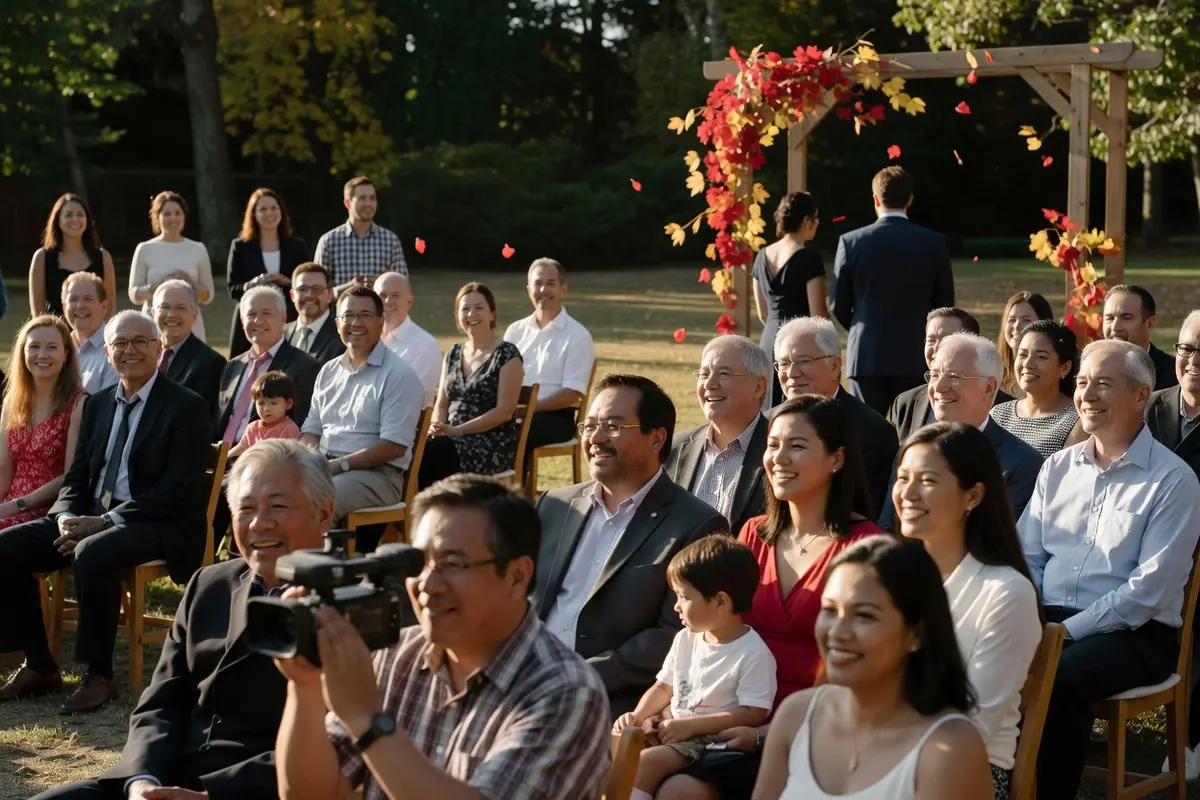
In many U.S. regions, sunset shifts earlier as October progresses. This affects filming. For example, if sunset is at 6:15 PM, end the ceremony by 5:45 PM so golden hour can cover portraits and cocktails. Have the sun at guests' backs during the ceremony to prevent squinting in videos and create rim light on the couple. For outdoor toasts, string lights add ambiance and extra illumination for faces as daylight fades. A decision rule: if any key moment falls after sunset, move it under lights or indoors. See /how-it-works for more on this approach.
Example Fall Wedding Timeline Focused on Light
A good fall timeline works backward from sunset. The interactive example below assumes a mid-October sunset and prioritizes usable light for key moments your guests can actually film well. Adjust for your location and always share the plan with the friends holding cameras. For example, in getting ready, direct friends to film by windows for soft light on details like vows being read aloud or a parent fastening a necklace.
Scrub the timeline
Fall Wedding Timeline: Light-First Edition
- 2:00 PM Getting Ready
Natural window light is abundant. Friends can film details, candid getting-ready moments, and short interviews. For example, use the prompt "What are you feeling right now?" See our getting-ready video ideas at /how-it-works for prompts that feel natural.
- 4:00 PM Outdoor Ceremony
Start early enough to finish in good light. Guests should film wide establishing shots then move to side angles for vows. Continuous recording works best here. Decision rule: stay back to avoid blocking views.
- 5:00 PM Golden Hour Cocktails
Peak light for beautiful footage. Assign one outgoing wedding party member to interview guests. CNBC tips from founder Anne Marie Carroll suggest leaving a camcorder near the guest book for video messages. Prompt example: "What surprised you most today?"
- 6:00 PM First Dance & Toasts
Transition indoors or under lights if needed. Have one dedicated guest filmer for speeches. Steady shots and good audio matter more than perfect exposure at this point. Get close for clear sound.
- 7:30 PM Reception & Dancing
Camcorders shine in lower light for candid dancing and reactions. Multiple angles from different friends create the best edit without feeling staged. For example, capture grandparents' faces during dances.
Shot Notes for Guest Filmers in Fall Conditions
Handing someone a camera without guidance creates chaos. Instead, give a few trusted friends our shot list at /shot-list and these fall-specific notes. Filming the ceremony from the sides rather than blocking the aisle allows for unobstructed views and more interesting angles that show emotion on guests' faces as well as the couple. Capture guest arrivals while light is still strong to set the scene. Get close during toasts for clear audio. Record short clips of leaves, tables, and details to help editing flow. For speeches our guide at /faq recommends landscape mode, steady hands, and avoiding constant zooming. These small directions turn guest footage from random into usable. For example, a script for interviews could be "Tell us about the first time you saw the couple together."
Tap to reveal
Click-to-Reveal: Fall Filming Tips for Guests
What if the ceremony runs long and light drops?
How do we capture the fall colors on film?
Should we film in bright sun or wait for softer light?
What about interviewing guests in fall weather?
Guest Flow That Feels Natural, Not Choreographed
The goal is footage that feels like real life. CNBC tips from Wedding Weekender founder Anne Marie Carroll are useful here: assign a few wedding-party members specific moments instead of asking everyone to film everything, pick an outgoing person to handle cocktail-hour interviews, and leave a camcorder near the guest book for video messages. This prevents the chaotic everyone-film-everything problem. We compare options in our article on how to assign wedding cameras at /compare. With average guest count at 117 you only need a few active filmers plus anyone who wants to pick up the instant camera. The rest can simply enjoy the crisp fall air. Encourage filmers to capture quiet moments like the couple exchanging glances during dinner or the way grandparents react to the vows. For example, assign one person to film only reactions during toasts.
Good guest flow means the camera disappears. The best shots happen when friends forget they're filming and simply react to the moment.
Instant Camera Tips That Complement Fall Filming
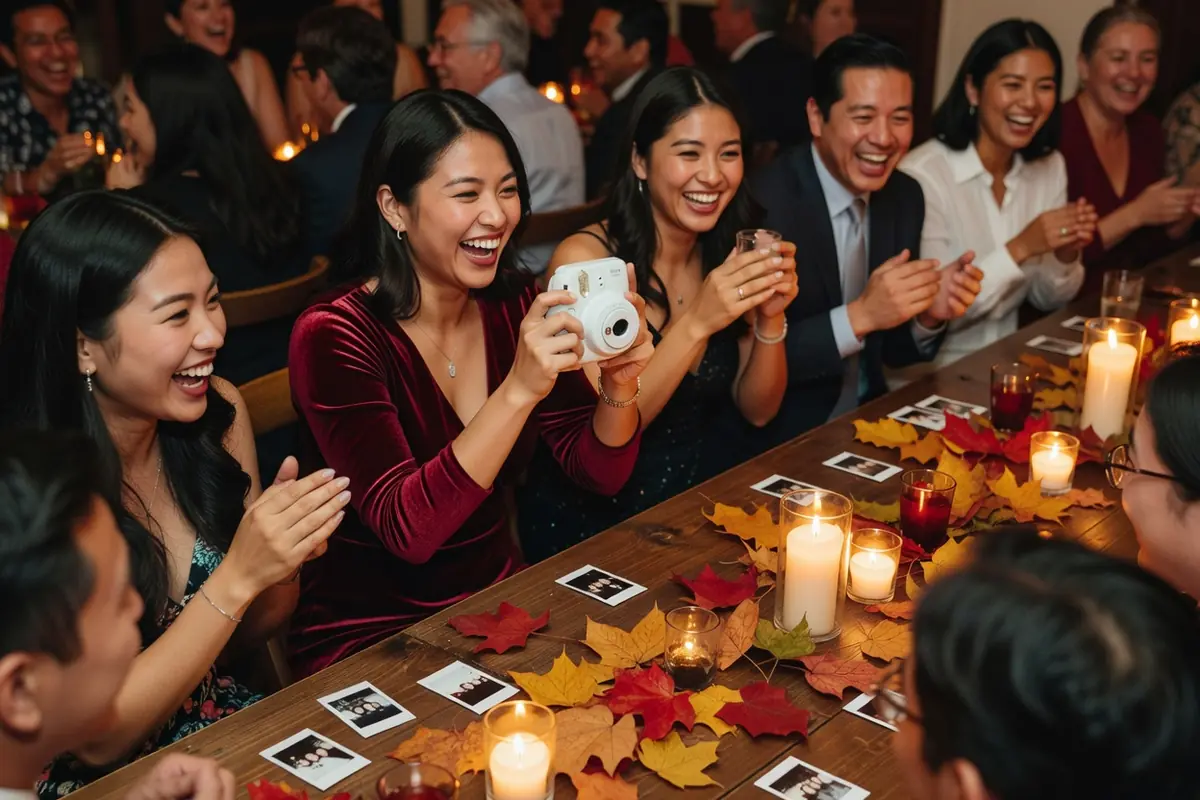
The included instant camera works well for fall weddings. The Instax Mini 12 uses film that develops in approximately 90 seconds, with 10 exposures per pack and a flash range of 0.3-2.2 m. In fall, the crisp light creates beautiful skin tones but also deep shadows under trees, so remind guests to use the close-up mode for 0.3-0.5 m when needed. Film costs roughly 0.70 to 0.90 dollars per shot. Place the camera at the guestbook station with a small sign asking for one fall memory or wish. The couple keeps the photo album and every instant print. See our full instant camera wedding guide at /faq.
When Light Drops Before Toasts: Practical Workarounds
This scenario happens often in fall. Position one camcorder on a stable surface or in the hands of a single assigned guest for the speeches. Close range helps with audio and reduces the need for perfect light. In our view, this is where camcorders add value. The Knot reports average videographer cost is 2300 dollars. Packages start at 449 dollars. Wedding Weekender's core package is 729 dollars and does not include an instant camera. See /compare for a full breakdown.
Checklist · saves on this device
Fall Wedding Light & Guest Flow Checklist
Why Couples Are Choosing Guest-Filmed Video for Fall Weddings
Vogue notes that Gen Z and younger millennial couples are turning away from hyper-produced slow-motion films. Some add camcorders alongside a full media team, others skip traditional videography entirely. The resulting films feel like the home movies parents used to make: authentic instead of cinematic. This approach fits fall particularly well because the season itself is nostalgic. Leaves, sweaters, crisp air, and real laughter pair perfectly with the slightly grainy, warm look of guest footage. You can add extra camcorders. See /how-it-works to learn how the kit works step by step.
| Time of Day | Typical Light | Filming Recommendation |
|---|---|---|
| Early Afternoon | Bright and direct | Focus on details and wide venue shots |
| Golden Hour (pre-sunset) | Warm and flattering | Interviews, portraits, ceremony |
| Post-sunset | Low and cool | Close-range toasts, steady reception clips |
Your Fall Film Can Be Both Beautiful and Realistic
The best fall wedding ideas balance the season's romance with practical execution. By respecting the light, giving friends clear shot notes, and including an instant camera, you create something lasting without the average videographer price tag. Packages start at 449 dollars for the Keepsake. A 100 dollar deposit holds your date. For example, visit your venue at the same time of day as your ceremony a few weeks before. Note where shadows fall in the afternoon and adjust seating to use soft sidelight. This improves guest footage without added stress on the day. See /faq for more on costs.
Questions couples ask
What is the most popular month for fall weddings?
How should we adjust our timeline for earlier fall sunsets?
What shot notes should we give guest filmers?
How much does a wedding videographer cost compared to a camcorder kit?
Can we still get good footage if the light drops before toasts?
Does the instant camera work well for fall weddings?
Keep reading