Wedding Wishes From Guests You Can Replay
Learn how to collect authentic wedding wishes from guests as replayable spoken or on-camera messages without trapping anyone in a line. Setup tips, prompts, station ideas, and how a camcorder kit turns them into a film you'll rewatch for decades.
In this article
- Why Replayable Wedding Wishes Beat Traditional Guestbooks
- The Line Problem: Why Traditional Setups Fail
- Three Practical Ways to Gather Wishes Without a Line
- Prompts That Get Real Messages, Not Filler
- How to Assign Your Wedding Party to Help
- Pairing Wishes With Instant Cameras
- Turning Raw Wishes Into a Film You'll Reopen
- Budget Reality Check for 2026 Weddings
- Common Pitfalls and How to Avoid Them
The best wedding wishes from guests are the ones you can press play on years later when you need a reminder of why you did this. A signed card is nice. A video of your college roommate tearing up while telling you to never stop dancing together? That's the one you'll actually replay.
The problem is the line. Park a camcorder by the guest book and you risk a traffic jam, stiff performances, or guests skipping it entirely. One effective approach is to invite spoken or on-camera wishes in ways that feel like natural conversation instead of an assigned task. This guide gives you concrete steps, real prompts, station setups, and ways to combine wishes with instant photos so the whole thing enhances the party instead of slowing it down.
The goal is wishes that feel like the party, not like homework.
Why Replayable Wedding Wishes Beat Traditional Guestbooks
According to The Knot's 2026 Real Weddings Study of 10,474 U.S. couples, the average wedding had 117 guests. That's a lot of signatures but not many memorable messages. A traditional guestbook often ends up filled with generic messages like "have a great marriage!" Replayable wishes give you tone of voice, facial expressions, and specific stories that actually land.
Vogue has noted that Gen Z and younger millennial couples are turning away from hyper-produced wedding videos and toward authentic footage. Some couples add camcorders alongside a full media team while others skip traditional videography altogether. Guest-recorded wishes fit this trend perfectly because they capture the real energy in the room.

The Line Problem: Why Traditional Setups Fail
A single camcorder next to a sign that says "record your wishes here" creates a bottleneck. Guests wait, feel self-conscious, and deliver short, awkward messages. Or they avoid it. The CNBC profile of Wedding Weekender founder Anne Marie Carroll recommends picking an outgoing bridesmaid or groomsman to gather messages at cocktail hour instead of waiting for guests to come to the camera.
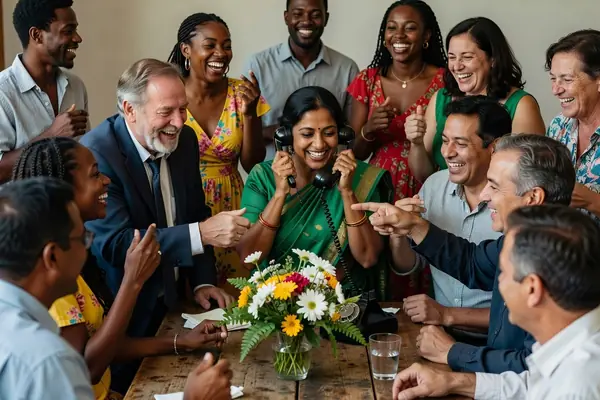
Audio guestbooks face the same issue. Rentals generally run $250 to $400. Guests still have to stand in one spot and speak into a vintage phone while everyone watches. Approaches that let wishes happen in motion tend to produce better results.
Tap to reveal
Click-to-Reveal Tips for Line-Free Wish Collection
Where should the recording actually happen?
How do you invite participation without pressure?
What if someone freezes on camera?
How many wishes should you aim for?
Three Practical Ways to Gather Wishes Without a Line
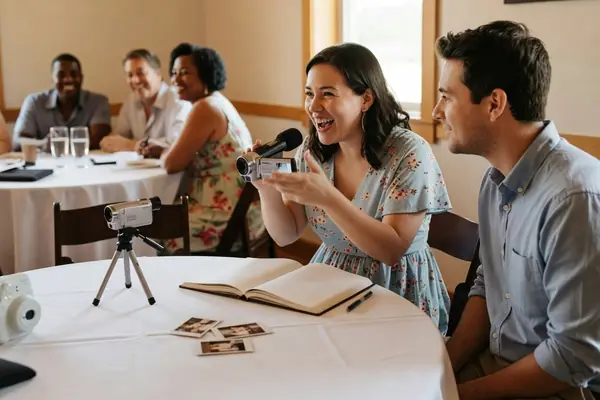
Here are three approaches that work consistently. The first is assigning a few outgoing wedding-party members to roam with the camcorder during cocktail hour. The second is a low-key wishes station with good lighting, a printed menu of prompts, and a small tripod so guests can record in pairs. The third combines wishes with your instant camera: guests take a photo, then record a short explanation of why they picked that pose.
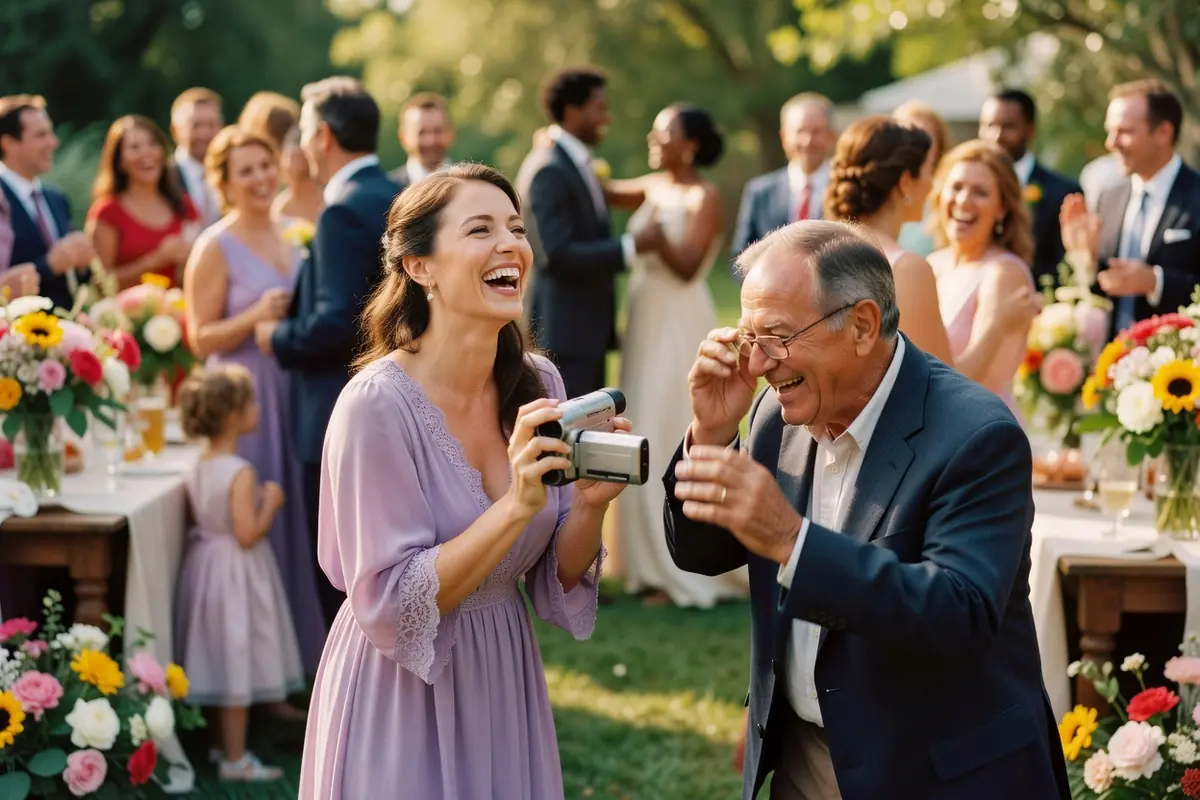
For the roaming approach, the assigned person joins a group naturally. For example, they might say "The couple would love a quick video memory from you. What's the funniest thing that happened when you all lived together?" Hold the camcorder casually at chest height to keep the vibe friendly rather than formal. This works best when guests are already sharing stories because it feels like part of the conversation. Selecting outgoing members who know most of the crowd helps the interactions flow.
A fixed station works well for more organized collection. Pick a quiet area with an appealing background that matches the wedding style and has soft, even lighting. Mount the camcorder on a tripod at a comfortable height. Display a list of prompts on a nice card. Some couples place this station near the favor table so it feels like a natural stop as guests move around the reception.
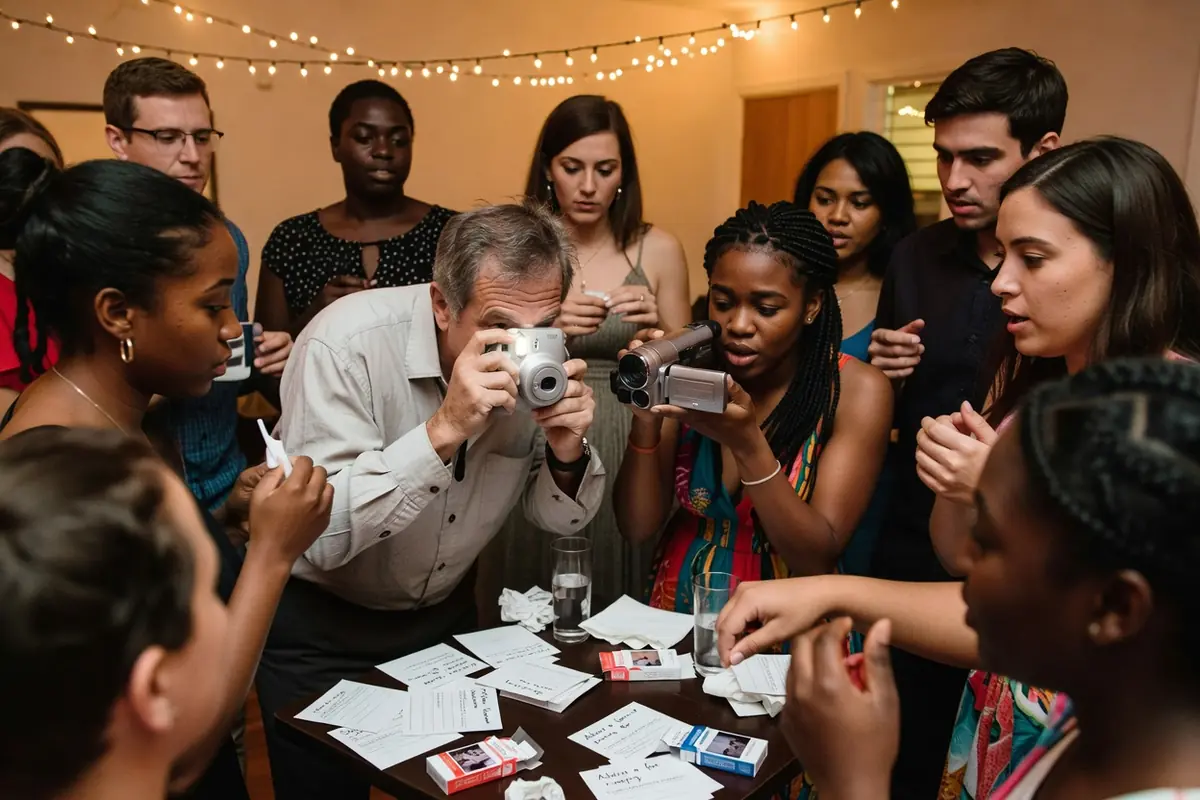
Pairing the wishes with instant photos creates a nice flow. Guests snap a fun photo using the instant camera, watch it develop, and then record why they chose that pose or what it means to them. This gives them time to think while the print emerges. The couple keeps the photo album and every instant print. It ties the visual memory to the spoken one, making the final film even more powerful.
| Approach | Best For | Effort Level | Visual Quality |
|---|---|---|---|
| Roaming wedding-party collectors | Larger weddings (over 100 guests) | Medium | High (natural backgrounds) |
| Fixed but friendly station | Shy crowds or micro weddings | Low | Consistent but can feel staged |
| Paired with instant photos | Any size, especially fun crowds | Low | Highest (ties memory to image) |
Prompts That Get Real Messages, Not Filler
Open-ended questions produce vague answers. Specific prompts produce stories. Instead of "say something nice," try "tell us about the first time you realized we were endgame" or "give us one piece of marriage advice you wish you'd gotten."
Tap a card
Flip These Cards for Ready-to-Use Wish Prompts
Print several of these on a nice card next to the camera. Guests pick one and go. This removes the panic of not knowing what to say. See the suggestions on the shot list page for more inspiration.
How to Assign Your Wedding Party to Help
Carroll's CNBC advice is solid: assign a few wedding-party members to capture specific moments. Pick an outgoing bridesmaid or groomsman to interview guests at cocktail hour. Give them each a short list of guests you especially want captured. This distributed approach prevents any single person from becoming a bottleneck and keeps the energy high.
A quick briefing the week before the wedding helps. Show them how the camcorder works, review which prompts tend to land best, and remind them that their job is to make it fun, not formal. Link them to the guide on assigning cameras to the wedding party on the shot list page and the how it works overview.
Shot-list builder
Wishes Recording Shot List
Give this printable list to your assigned collectors. Check off moments as they happen to ensure you get variety without forcing anything.
Pairing Wishes With Instant Cameras
The Instax Mini uses film packs with 10 exposures each and develops in about 90 seconds (temperature dependent). Film costs roughly $0.70 to $0.90 per shot.
Packages start at $449 (the Keepsake). We ship the camcorder, the Instax Mini instant camera (with film) and the photo album together in one box. The couple keeps the photo album and every instant print. Both cameras (camcorder and Instax) go back in that same box with the prepaid return label. We edit the footage into a finished wedding film. You can add extra camcorders. A $100 deposit holds a date. See all packages at [/packages]. This combination gives you both the image and the story behind it.
Turning Raw Wishes Into a Film You'll Reopen
Once the footage is captured, editing turns the raw wishes into a film you will reopen for years. The service mixes the strongest guest messages with ceremony and reception highlights. Short wishes provide quick hits of emotion while longer stories add depth. For example, cut a series of 10-second pieces of advice into a fast montage set to an upbeat song from your first dance playlist. A good decision rule is to include a balance: at least a few from family, childhood friends, and colleagues to represent all parts of your life.
For more on what the final film can look like, see how it works or the FAQ. The key is mixing short wishes with longer stories so the pacing stays lively. You can add extra camcorders if your guest list is large. A $100 deposit holds your date.
Budget Reality Check for 2026 Weddings
The Knot reports the average videographer costs $2,300 while the average wedding runs $34,000. A camcorder approach with editing included can sit nicely between a full videography team and a pure DIY effort. Audio guestbook rentals generally run $250 to $400.
Common Pitfalls and How to Avoid Them
Don't wait until the reception starts to explain the plan to your wedding party. Send them a brief ahead of time. For example, provide a short script they can use: "Hey, I'm collecting a few video wishes for the couple. Any chance you can share one memory that always makes you smile about them? It will only take 20 seconds." Make sure they know how to use the equipment and understand the goal of keeping things fun and natural.
Also see the FAQ and how it works page so every element supports the others.
The wedding wishes from guests that matter most are the ones that sound like your people. Give them the right invitation, the right prompts, and the right tools, and they'll hand you gold. Then the editing process shapes it into a film that still feels like the best day of your life even when you're watching it on an ordinary Tuesday.
Questions couples ask
How do you ask guests for wedding wishes without making it awkward?
Is it better to record video wishes or audio only?
How many guest wishes should we aim to collect?
Can we combine this with our photographer and DJ?
What if guests don't want to be on camera?
How is the raw footage turned into a finished film?
Keep reading