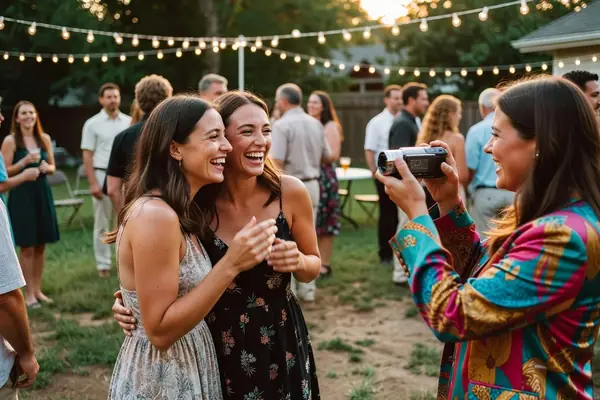
Phone vs Camcorder for Wedding Guest Footage
Phone vs camcorder wedding footage compared: why phones create vertical clips while a shared camcorder delivers continuous horizontal video with optical zoom. We break down quality, practicality, and final films for real couples.
In this article
- Why Phones Have Become the Default for Guest Footage
- What a Shared Camcorder Brings That Phones Cannot
- Head-to-Head Technical Comparison
- The Chaos of Too Many Choices
- Real Costs: Phones, Camcorders, and Videographers
- How the Final Edited Film Looks
- Practical Tips for Getting Better Footage Either Way
- When We Think a Camcorder Rental Makes Sense
- Beyond the Camera: Creating Something That Lasts
Your guests already have phones in their pockets ready to record. So why add a camcorder? While phones capture quick vertical clips for social media, a single shared camcorder creates one continuous horizontal record that edits into a watchable film. In our view, most couples benefit from both. Phones deliver the chaotic joy of the day. A camcorder delivers the story. This is our straight comparison of phone versus camcorder wedding footage based on how real weddings actually unfold.
Why Phones Have Become the Default for Guest Footage
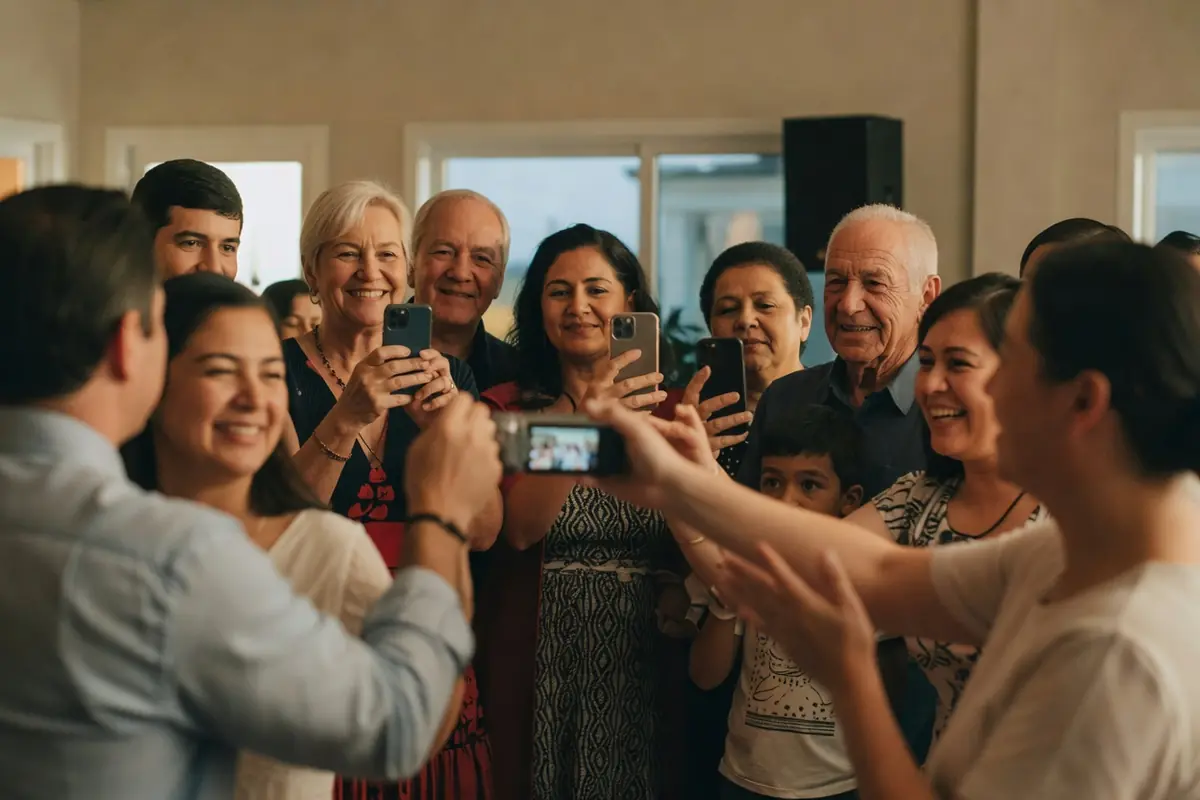
Practically every adult at a wedding carries a powerful recording device. The average wedding has 117 guests according to The Knot's 2026 Real Weddings Study of 10,474 couples. That is a lot of potential cameras. Guests pull out their phones for toasts, dances, and candid moments. The footage is immediate. They can share stories instantly. Many couples now skip traditional videography entirely and rely on these guest phone videos, as noted in Vogue's piece on the wedding camcorder trend.
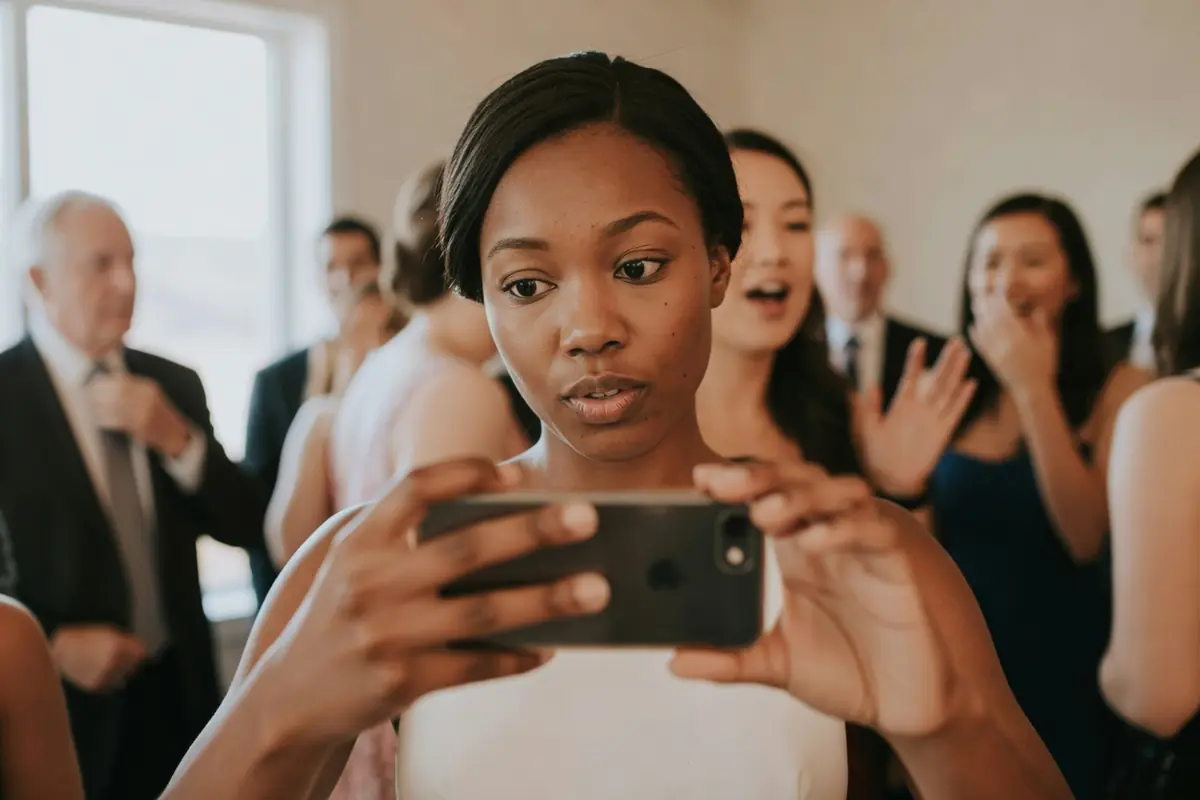
The appeal is obvious. No extra cost. No learning curve. Phones produce high resolution in good light and guests already know how to use them. Yet the results tend to be vertical clips that work well for social media but can be challenging to edit into one cohesive film. Batteries can drain and storage can fill up. The final product can feel like disconnected moments rather than a flowing story.
What a Shared Camcorder Brings That Phones Cannot
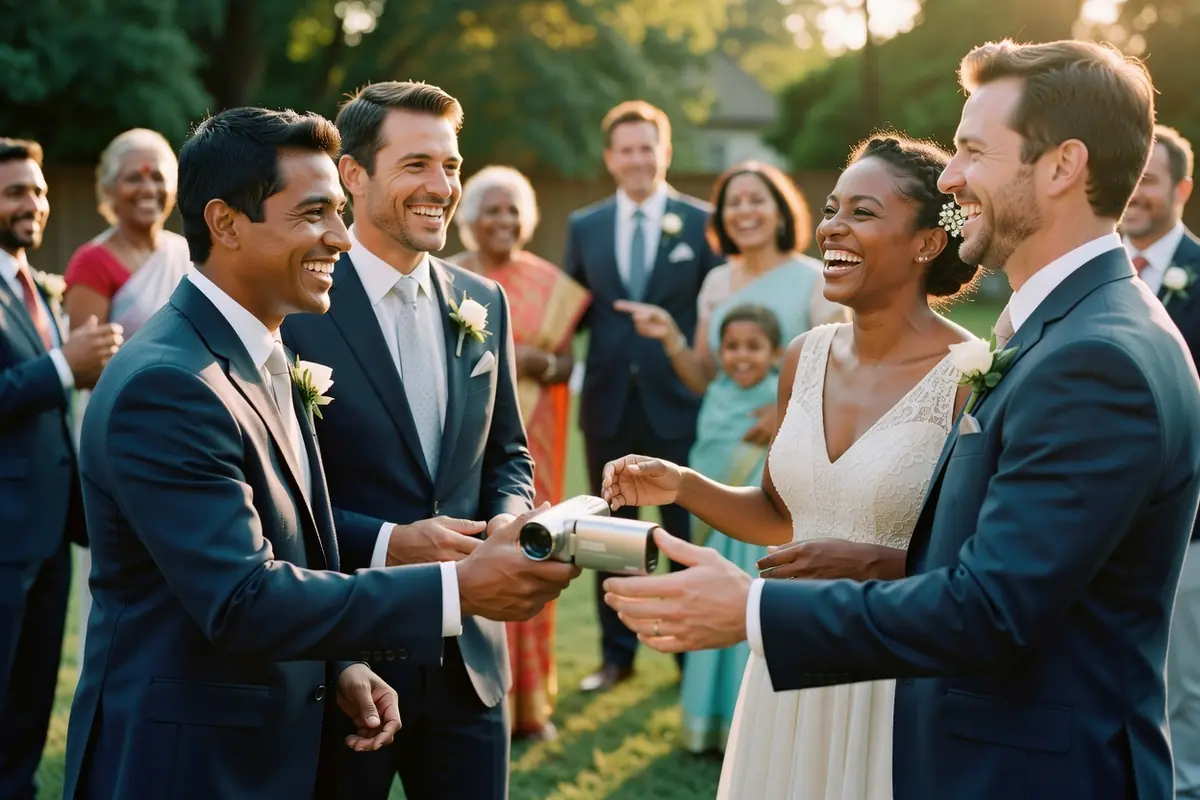
A compact camcorder passed among trusted friends creates something different. One person starts recording the ceremony from the back. Another picks it up for cocktail hour interviews. A third films the first dance from across the room using the optical zoom that compact camcorders can offer as a general example. The result is longer, more intentional takes instead of scattered short clips.
This difference appears in the final film. Camcorder footage tends to have better audio because the microphone stays closer to speakers during toasts. The horizontal format matches how most people watch videos on laptops or TVs. Optical zoom lets guests capture emotional details from a distance without crowding the couple. And because only one camera is being passed, the footage has a consistent look instead of varying phone models and lighting situations.
Drag to compare
Phone Footage vs Camcorder Footage

Head-to-Head Technical Comparison
| Factor | Guest Phones | Shared Camcorder |
|---|---|---|
| Format | Mostly vertical (great for social) | Horizontal (matches film/TV) |
| Zoom | Digital zoom often looks grainy | 30x optical zoom example stays clean |
| Battery life | Varies by phone and usage | About 115 min continuous recording as a compact camcorder example |
| Consistency | Varying cameras and qualities | One camera creates uniform footage |
| Audio | Often distant or muffled | Better at capturing toasts and vows |
| Guest effort | Zero learning curve | Simple pass-and-record but requires trust |
The Chaos of Too Many Choices
Without clear direction, guests with phones often capture the same short, repetitive moments. No one feels responsible for the full story. The result can be 20 versions of the cake cutting but no footage of the vows or parent speeches.
A shared camcorder changes the dynamic. Assign a few reliable wedding party members as noted by Wedding Weekender founder Anne Marie Carroll in her CNBC interview. For example, ask one outgoing bridesmaid to interview guests at cocktail hour with questions like 'What is your favorite memory with the couple?' or 'How did you meet the bride or groom?' Another can leave the camcorder by the guest book with a sign that says 'Record a message for the newlyweds!' This creates focused coverage instead of scattered phone clips.
Real Costs: Phones, Camcorders, and Videographers
Phones cost nothing extra but the average videographer runs $2,300 according to The Knot. Our Keepsake package starts at $449. We ship the camcorder, the Instax Mini instant camera (with film) and the photo album together in one box. The couple keeps the photo album and every instant print. Both cameras (camcorder and Instax) go back in that same box with the prepaid return label. We edit the footage into a finished wedding film. You can add extra camcorders. A $100 deposit holds a date. Services like those from Pass the Cam start at $429 and Wedding Weekender offers packages at $729 and $989. Their top package lists at $1,249. Wedding Weekender's packages do not include an instant camera.
How the Final Edited Film Looks
This is where the phone vs camcorder wedding decision matters most. Phone-only weddings often produce highlight reels of vertical clips with text overlays and trending audio. Camcorder footage gives editors longer continuous scenes, clean audio, and zoom shots that tell the story without constant cuts. As Vogue reported, Gen Z and younger millennial couples are turning away from hyper-produced slow-motion films. They want something that feels like the day actually felt.
The best results usually come from combining both. Guests still use their phones for fun candid vertical clips and immediate sharing. The camcorder captures the backbone of the day. The footage can be edited together into one film that feels authentic instead of chaotic. See /how-it-works for details on the process.
Practical Tips for Getting Better Footage Either Way
Whether you rent a camcorder or rely on phones, a few rules of thumb improve results dramatically. Tell guests the exact moments that matter most. Provide a simple shot list instead of vague instructions. For camcorders, designate a few specific people to be the primary operators. This avoids the problem of too many people doing too little.
- Charge every phone and the camcorder fully the night before
- Remind guests that horizontal phone videos are much more useful for editing
- Place the camcorder on a table near the guest book with a small sign inviting video messages
- Assign one outgoing friend to gather guest interviews at cocktail hour
- Trust your people. The best moments often happen when the camera is simply present
- Remember that imperfect footage feels more real than perfect drone shots
Thinking ahead about lighting at different times of day helps too. For example, morning ceremonies often feature side natural light that flatters skin tones in video; ask operators to position the camcorder so light falls across faces rather than from directly behind. In evening receptions, avoid pointing the lens straight at bright fixtures to prevent blown-out spots. Suggest operators keep the camera steady, hold it horizontally, and record for at least 30 seconds at a time. These decision rules create smoother video that is easier to watch later. For more specific guidance, check /faq or /shot-list. These tactics work whether your main camera is a phone or a camcorder.
When We Think a Camcorder Rental Makes Sense
If your priority is immediate social media content and you are comfortable with a highlight reel made from vertical clips, phones may be enough. But if you want a film you will actually rewatch in ten years, a camcorder adds enormous value. The continuous record, better audio, optical zoom, and consistent quality make editing worthwhile.
In our view the sweet spot is using both. Let guests snap and film with their phones for those fun candid moments. Add one shared camcorder for the backbone footage that ties it all together. Our Keepsake package starts at $449.
Compare all your options in our /compare. Or see /how-it-works. A $100 deposit holds your date while you decide.
Phones give you volume. A camcorder gives you clarity. In our view, most couples end up wanting both.
Beyond the Camera: Creating Something That Lasts
The best weddings create multiple kinds of memories. The instant camera included in our packages gives guests something tangible to contribute. Film develops in about 90 seconds (temperature dependent). Each pack has 10 exposures. Guests or the couple fill the photo album with the prints. The couple keeps the photo album and every instant print. These physical memories complement the digital film from the camcorder and any phone footage you share.
Whether you choose phones only, add a camcorder, or hire a full videographer for $2,300 on average, the goal stays the same: a record of the day that still moves you years later. The service makes the camcorder option simple, affordable, and actually fun for everyone involved. No hype. Just better footage.
Questions couples ask
Can you just use guest phone videos instead of a camcorder at a wedding?
What is the zoom difference between phones and camcorders for weddings?
How much does it cost to rent a wedding camcorder?
Should you use both phones and a camcorder at your wedding?
Do camcorders record better audio than phones at weddings?
Keep reading